

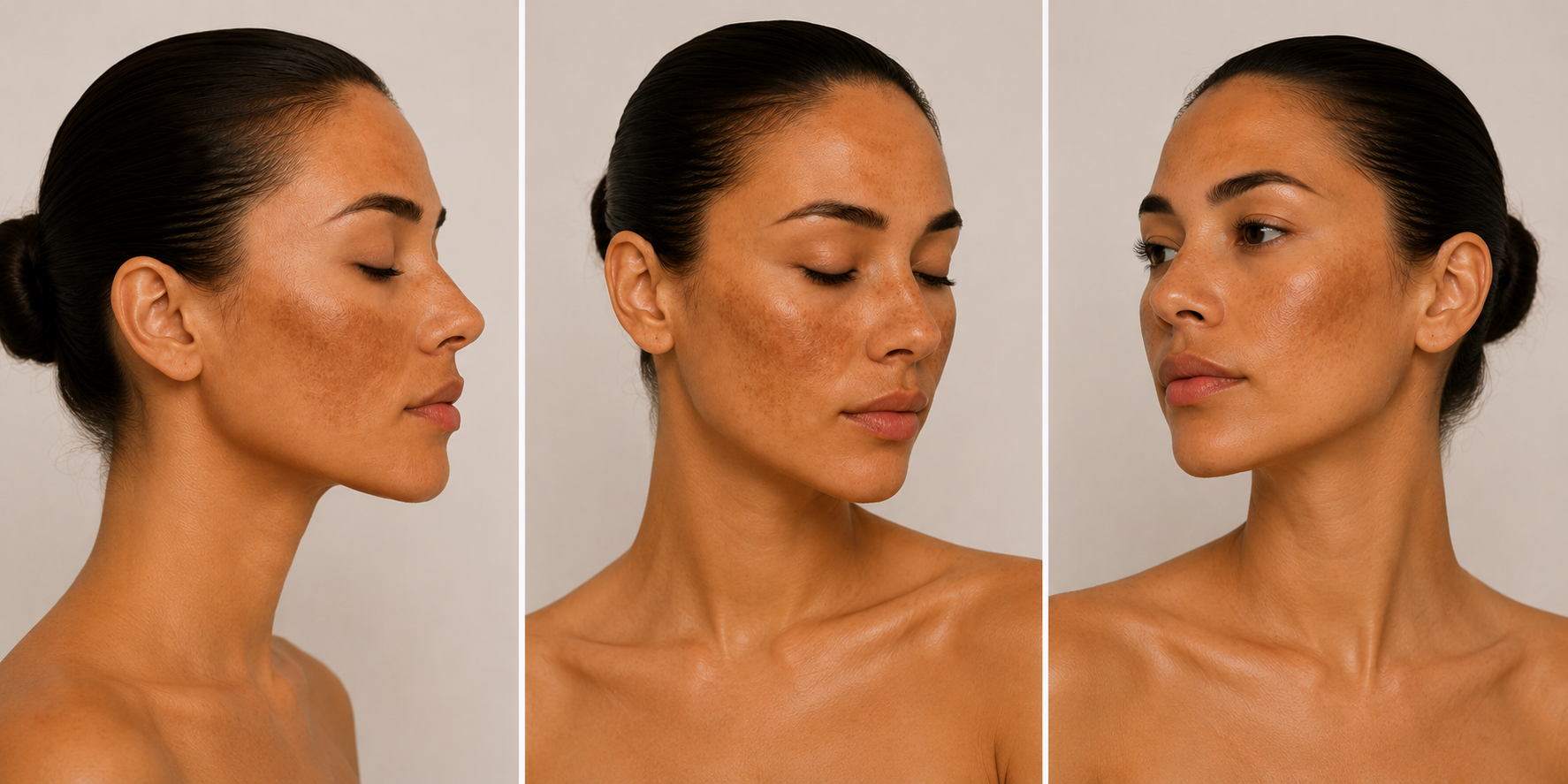
MELASMA
Melasma is a common chronic pigmentation disorder that causes irregular brown patches on the skin. Although melasma is generally harmless, it can be visually distressing and have a significant effect on wellbeing and quality of life.
In this article, I explain what melasma is, why it develops, who is more likely to develop it and what causes it. I also discuss the most common ways to reduce and treat melasma today—from daily skincare and sun protection to various aesthetic treatments.
It is important to understand that melasma is not usually a problem that can be solved with a single treatment. Because melasma can reactivate after successful treatment, the best results require a personalised approach, fewer triggering factors, consistent care and prevention.
Melasma – what is it really?
Melasma is a hyperpigmentation disorder that causes brown or greyish-brown patches, most often on the face. Its development is influenced by genetic predisposition, hormonal changes, sun exposure and other external factors, including heat, skin inflammation and skin irritation.
A great deal of new information about melasma has emerged in recent years. It is not simply “excess pigment”, but an acquired pigmentation disorder involving melanocytes, or pigment-producing cells, as well as keratinocytes, blood vessels, fibroblasts, mast cells, hormones, UV radiation and other external factors.
Melasma is neither contagious nor dangerous, but many people find it visually distressing, and it can therefore have a considerable impact on self-esteem and quality of life. A 2022 review involving 1,398 patients with melasma found that the condition significantly affects emotional wellbeing and social life.
It is important to understand that melasma does not develop solely because the skin has had too much sun. Current understanding points to the combined effect of several factors, including:
- genetic predisposition
- UV radiation
- visible light
- hormonal changes
- inflammation
- stress
- changes in the skin’s blood vessels
- age-related changes in the skin
- heat
- skin irritation and trauma
- certain cosmetic and aesthetic treatments
Why does melasma develop?
In melasma, the skin’s pigment-producing cells, or melanocytes, become overactive. We now know, however, that the problem is not limited to melanocytes. Changes also occur in the epidermis, dermis, blood vessels and supporting cells of melasma-affected skin, contributing to the development and persistence of pigmentation.
The most important external trigger is considered to be sun exposure. Both UVA and UVB radiation stimulate melanocytes and trigger oxidative stress and inflammatory processes in the skin. UV radiation affects not only melanocytes, but also keratinocytes, fibroblasts and mast cells. These begin to release various signalling molecules and growth factors, which in turn promote melanin production. Chronic sun damage can therefore change the skin’s microenvironment in a way that allows melasma pigmentation to persist even after direct sun exposure has decreased.
Another important factor is hormonal change. Melasma is considerably more common in women, and its onset or worsening may be associated with pregnancy, hormonal contraceptives and other hormonal changes. Oestrogen and progesterone can affect melanocyte activity and increase melanin production.
Genetic predisposition also plays a role in the development of melasma. This helps explain why not everyone develops melasma even when exposed to sunlight or hormonal changes.
Changes associated with chronic inflammation and skin ageing have also been described in melasma-affected skin. For example, fibroblasts altered by UV damage can influence melanocytes and prompt them to produce melanin, or pigment. Melasma-affected skin has also been found to contain more mast cells and greater mast-cell activity. When activated, mast cells release histamine and several substances involved in inflammation and immune responses.
Skin irritation and inflammation can also worsen melasma. Overly aggressive cosmetic treatments, strong peels or other repeated irritation, for example, can cause an inflammatory response that promotes pigment formation or makes existing melasma more active. With melasma, it is therefore important to find a balance between renewing the skin and avoiding excessive irritation.
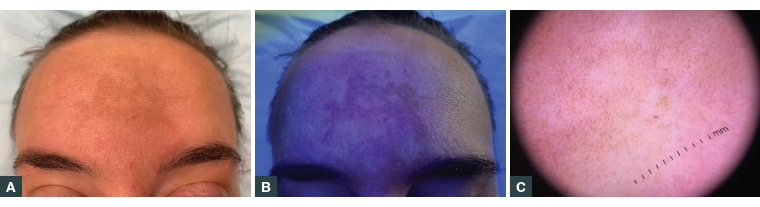
Pigmentation visible on the forehead (A), under an ultraviolet lamp (B) and with a dermatoscope (C).
Melasma treatment – where should you start?
Melasma cannot be permanently “cured” with a single treatment. The usual goals of treatment are therefore to:
- reduce existing pigmentation
- reduce melanocyte activity
- control triggering factors
- prevent new pigment from forming
- maintain the result achieved.
The foundation of all treatment is sun protection! Daily broad-spectrum protection against UVA, UVB and visible light is recommended.
Topical active ingredients:
HYDROQUINONE is an active ingredient that reduces pigmentation. In Estonia, 2% hydroquinone is permitted for professional use. Hydroquinone is most often used in “Kligman’s formula”, a prescription topical triple-combination treatment containing hydroquinone (2–5%), tretinoin (0.05–0.1%) and a corticosteroid (hydrocortisone, dexamethasone or fluocinolone acetonide).
- hydroquinone reduces pigment production
- tretinoin promotes skin renewal and supports anti-pigmentation treatment
- the corticosteroid reduces inflammation and skin irritation
It is important to know that Kligman’s triple combination is a prescription medical treatment, not an ordinary cosmetic product. A doctor determines the duration of treatment and the concentrations of the active ingredients, and thorough medical guidance is required.
TRANEXAMIC ACID reduces melanocyte activity and thereby decreases pigment production. Tranexamic acid is used in medicine to control bleeding, but in recent years it has increasingly been studied as a treatment for melasma. A review and meta-analysis published in 2024 included 22 randomised trials and 1,280 patients with melasma. Tranexamic acid was administered orally, topically and by injection, and a reduction in melasma severity was observed with every route of administration. The strongest effect was seen with oral tranexamic acid, although topical products also produced good results. Oral tranexamic acid is an off-label treatment for melasma. The medicine is available in Estonia but is not specifically authorised for treating melasma. It is a prescription medicine and must be prescribed by a doctor.
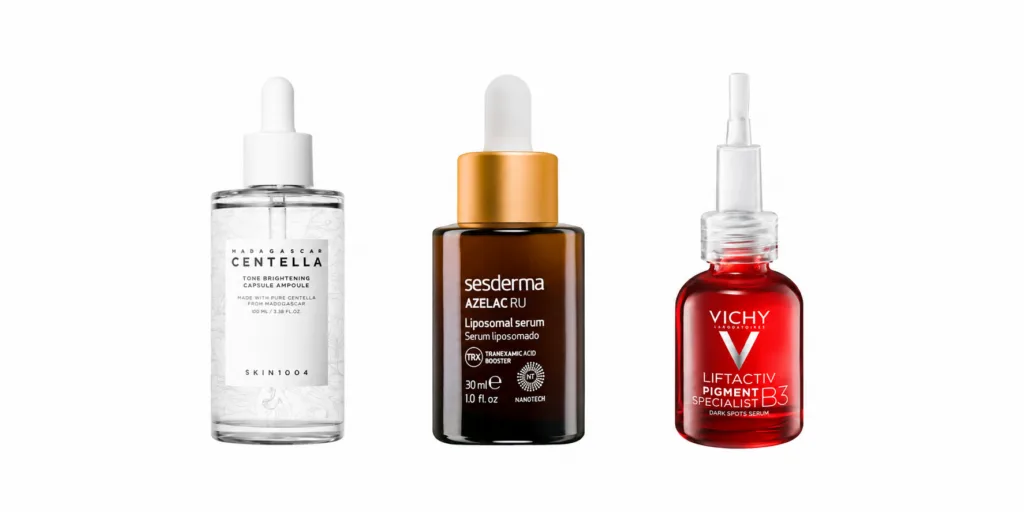
Topical tranexamic acid is used in creams and serums that are also available over the counter in Estonia. Examples of products available on the Estonian market include:
- SKIN1004 Madagascar Centella Tone Brightening Capsule Ampoule—its ingredients include tranexamic acid, niacinamide, Centella asiatica and vitamin C.
- Sesderma Azelac Ru Depigmenting Liposomal Serum—contains tranexamic acid together with other ingredients that affect pigmentation, including azelaic acid, 4-butylresorcinol and vitamin C.
- Vichy Liftactiv Pigment Specialist B3 Face Serum—contains tranexamic acid together with 5% niacinamide, glycolic acid and vitamin C.
AZELAIC ACID is a naturally occurring chemical acid found in barley and rye. It is most commonly used for acne, rosacea and hyperpigmentation. Azelaic acid can also reduce the production of melanin, or pigment. It also has anti-inflammatory properties that play an important role in reducing melasma. In Estonia, azelaic acid is available in cosmetic products as well as in prescription medicines. One prescription medicine sold in Estonia is Skinoren 20% cream; a doctor will assess whether it is suitable for you.
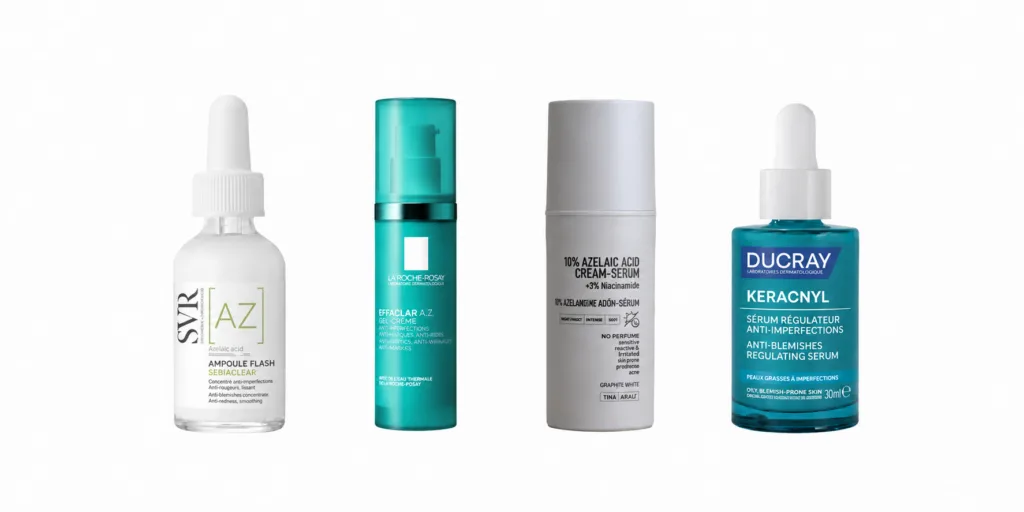
Cosmetic products with lower concentrations can also be included in a skincare routine for melasma. Examples available from Estonian pharmacies include:
- SVR [AZ] Ampoule Flash Sebiaclear Face Serum—contains 15% azelaic acid, 2% niacinamide and 2% zinc. According to the manufacturer, it is intended for pigmentation, redness and acne-prone skin.
- LA ROCHE-POSAY Effaclar A.Z. gel-cream for blemish-prone skin—contains 10% azelaic acid as well as salicylic acid, hyaluronic acid and zinc.
- NERDS cream-serum with 10% azelaic acid—contains 10% azelaic acid, 3% niacinamide, olive squalane and murumuru butter. According to the manufacturer, it is suitable for reducing hyperpigmentation and uneven skin texture.
- DUCRAY KERACNYL serum with azelaic acid—contains 8% azelaic acid and 3% glycolic acid. According to the manufacturer, it is particularly suitable for patients who have acne-prone and oilier skin in addition to hyperpigmentation.
Aesthetic medicine treatments:
CHEMICAL PEELS—in addition to at-home skincare, regular chemical peel treatments may help with melasma. Glycolic acid, lactic acid and salicylic acid are the acids most commonly used to reduce melasma. A 2024 review rated glycolic acid as the safest and most effective chemical peel for melasma. It is important to know that a “stronger acid” does not automatically mean a “better result”. Melasma is a pigmentation disorder, and an overly aggressive peel can cause irritation and post-inflammatory hyperpigmentation, thereby worsening melasma.
Read more about the treatment: chemical peel
MICRONEEDLING is used for melasma both as a standalone treatment and to support the delivery of active ingredients into the skin. The intensity of microneedling must be selected according to the patient’s skin type and melasma activity, as excessive inflammation can worsen pigmentation. Microneedling has been studied in combination with tranexamic acid, vitamin C and other anti-pigmentation ingredients. A 2023 study found that combining microneedling with topical tranexamic acid is effective in reducing melasma.
Read more about the treatment: microneedling
LASER AND LIGHT TREATMENTS can be effective in treating melasma, but particular care is required and you should always consult an aesthetic medicine specialist beforehand. Some lasers and light-based devices can produce very good results, while excessive heat or trauma to the skin can cause post-inflammatory pigmentation and a flare-up of melasma.
IPL, or intense pulsed light, is one possible procedure for treating melasma. IPL uses a broad spectrum of light that can affect both melanin and changes associated with the skin’s blood vessels. It may therefore help reduce pigmentation and even out skin tone. A review published in early 2026 found that IPL can improve melasma in both the epidermis and dermis. Moderate improvement was reported in patients who received IPL treatment alone. The best results were achieved when IPL was combined with other topical treatments.
Read more about the treatment: IPL
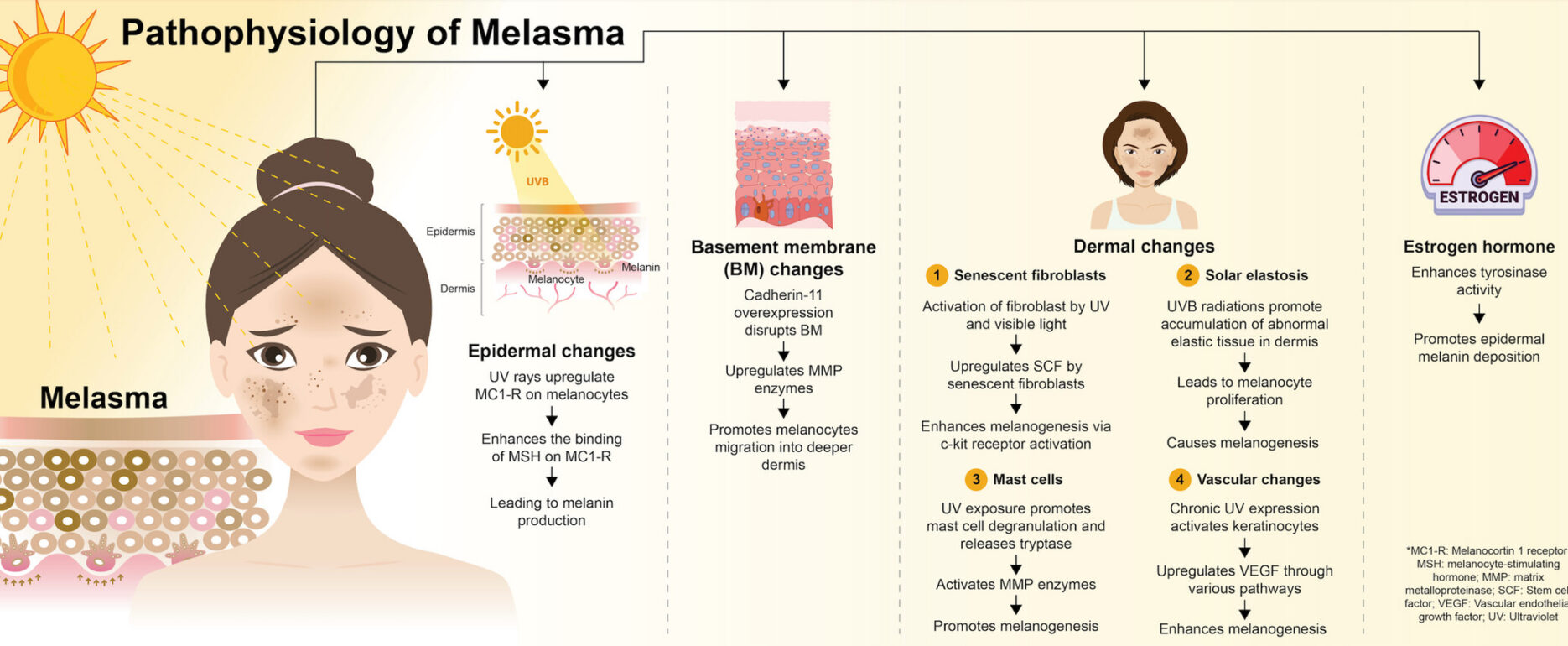
This figure from a scientific article clearly shows that melasma is not simply “too much pigment”. Different layers of the skin are involved in its development and persistence, while UV radiation and hormones play important roles. The processes associated with the development of melasma are shown in greater detail in the figure.
Summary
Melasma is a chronic pigmentation disorder influenced by several factors, above all UV radiation, hormonal changes, genetic predisposition and inflammatory processes in the skin. The goal of melasma management is therefore not only to reduce existing pigmentation, but also to prevent it from returning.
Treating melasma requires consistency, an individual approach and realistic expectations. The best results are usually achieved by combining topical treatment with procedures that reduce pigmentation. It is therefore important to continue using sun protection and caring for the facial skin even after pigmentation has subsided, as melasma can recur.
Patience, consistency and informed skincare can help you move towards a more even and healthier-looking complexion.
This article is based on scientific publications. Read more about melasma here:
- https://link.springer.com/article/10.1007/s13555-022-00779-x
- https://onlinelibrary.wiley.com/doi/full/10.1111/ijd.17718
- https://pmc.ncbi.nlm.nih.gov/articles/PMC8765589/
- https://pubmed.ncbi.nlm.nih.gov/38530985/
- https://pubmed.ncbi.nlm.nih.gov/41508749/
- https://www1.racgp.org.au/ajgp/2021/december/melasma
 Kadaka tee 42b, 12919 Tallinn II korrus
 E-R 09.00 — 17.00
 info@n8r.ee
 +372 59009272