

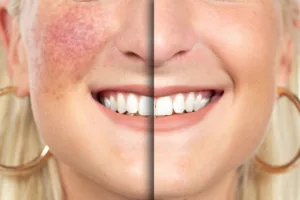
Description of facial redness
Facial redness is a broad term referring to an unusual reddening of the facial skin. Redness can be temporary (such as blushing from embarrassment or temperature fluctuations) or a more chronic problem. Some experience redness diffusely across the entire face, while others only in certain areas (cheeks, nose). Redness on skin It can be cosmetically bothersome, but it is important to understand its causes.
Why is your face red?
- Sensitive skin: Sensitive skin owners tend to blush more easily – for example, their skin may react with redness to certain cosmetics, temperature fluctuations, or even mechanical touch.
- Emotions and physical exertion: Stress, anxiety, or shyness can trigger facial flushing (blood vessels dilate under the influence of the nervous system). The face also turns red when exercising or consuming hot food and beverages, as blood flow to the skin intensifies.
- Skin diseases: Persistent redness may be caused by various skin conditions – rosacea (treated separately), seborrhoea (red and scaly skin, for example on the nose and between the eyebrows), or allergic contact dermatitis (a reaction to a product). It is important to determine whether the redness is associated with a specific disease.
- Environment: Sunburn is a classic cause of facial erythema. Cold wind or hot weather can also cause facial erythema (wind and heat damage).
How to Reduce Face Redness
- Calming maintenance: Use redness-reducing creams containing soothing ingredients such as aloe vera, chamomile, green tea or panthenol. Special anti-redness products (creams with a green undertone) help visually neutralize redness.
- Cooling: For temporary redness, gentle cooling helps – for example, a cold compress or thermal water spray that constricts blood vessels and soothes the burning sensation.
- Avoid irritants: Identify what triggers the redness in your case and try to avoid it. If you suspect that a specific cream or cosmetic product is causing the redness, stop using it.
- Medical assistance: If redness is persistent or accompanied by itching/tingling, it is advisable to consult a dermatologist. Prescription creams (e.g., mild cortisone ointment for allergic reactions) or targeted treatments (e.g., antifungal creams for seborrhea) may be recommended.
Prevention of redness
- Strengthen the skin barrier: Use moisturizing creams and products with ceramides that strengthen the skin’s protective barrier – a strong skin barrier is less prone to redness.
- Protection against weather: Cover your face with a scarf in cold and windy conditions; in hot weather, stay cool and drink cold beverages. Using SPF cream helps prevent redness and burns caused by the sun.
If facial redness has become a daily concern, we can help you. Book time for IPL redness treatmentTo relieve redness and improve your feeling.
 Kadaka tee 42b, 12919 Tallinn II korrus
 E-R 09.00 — 17.00
 info@n8r.ee
 +372 59009272