

What is hair loss
Hair loss means more significant hair loss than usual and a receding or thinning hairline. This can manifest differently: in men often baldness in the temples and crown area (androgenetic alopecia), in women diffuse thinning over the head or widening of the part line. It is normal to lose ~50-100 hairs a day, but if the loss is persistently greater and hair doesn’t grow back, thinner areas appear.
Common Causes of Hair Loss
- Hereditary balding (androgenetic alopecia): This is the most common cause, especially in men. Under the influence of the hormone DHT, hair follicles miniaturize – the hair becomes finer and shorter until it stops growing. In men, an “M-shaped” receding hairline and bald spot on the crown develop; in women, there is a general thinning of hair, but complete baldness is rare.
- Stress and disease: Severe physical or emotional stress, illness with high fever, surgery or childbirth can cause temporary hair loss (telogen effuvium). Thyroid disorders, iron deficiency anemia, autoimmune diseases (alopecia areata – patchy hair loss), etc., may also play a role.
- Nutrition and lifestyle: Insufficient light intake, sudden weight loss or lack of vitamins and minerals (especially iron, zinc, vitamin D, B vitamins) can inhibit hair growth. Smoking also impairs scalp circulation.
- Medications: Certain medications (e.g., chemotherapy, as well as some hormone treatments, blood pressure medications, antidepressants) can cause hair thinning as a side effect.
Treatment and support of hair loss
- Scalp and general health inspection: To start, it is important to identify the underlying cause. Blood tests (e.g., thyroid function, iron levels) and a medical consultation can help determine if there is a treatable medical cause. Addressing this (e.g., iron supplements, thyroid medication) may stop hair loss.
- Fixed equipment: World-renowned treatment is minoxidil (5% foam or solution), applied to the scalp twice daily. It improves blood flow to hair follicles and may promote new hair growth or strengthen existing hair. Results typically take 4-6 months to become noticeable.
- Oral medicines: Men are often prescribed finasteride, which blocks the action of DHT hormone and slows hair loss. In women, anti-androgenic agents (e.g., spironolactone) may be used to influence hormonal balance when appropriate. These medications require medical supervision.
- Vitamins and food supplements: Hair growth is often supported by biotin, zinc, iron, vitamin D, and collagen. Although these do not directly prevent hereditary baldness, they help eliminate hair weakness caused by nutrient deficiencies.
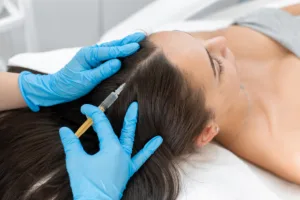
- PRP therapy: A clinical procedure where the patient’s own blood plasma (rich in growth factors) is injected into the scalp. Treatment of hair loss PRP can stimulate dormant hair follicles and improve hair thickness. It is a popular adjunct treatment for both men and women.
- Hair transplantation: If the hairline has receded significantly, hair transplantation is a permanent solution – hair follicles taken from the back of the scalp are transplanted to the balding area. This is a surgical procedure performed under local anesthesia. Our clinic will refer you to hair transplantation specialists if necessary.
How to care for thinning hair
- Gentle hair care: Use gentle shampoos, avoid very hot water and aggressive rubbing with a towel. Gently comb your hair as it is more fragile when wet.
- Style and hairstyle: With the help of cutting, hair can look fluffier (short layers give volume). Avoid tight hairstyles that pull on the hair (ponytails, braids) – constant tension can promote hair loss (tractional alopecia).
- Scalp massage: A few minutes of scalp massage every day can promote blood flow to the hair follicles. This is a simple home method to invigorate the hair.
If you are experiencing excessive hair loss, do not wait for the problem to worsen. Book your appointment carboxytherapy for hair or IPRF for your blood injection procedures Strengthen your hair and restore its density.

 Kadaka tee 42b, 12919 Tallinn II korrus
 E-R 09.00 — 17.00
 info@n8r.ee
 +372 59009272