
I-PRF: injections made from your own blood
Could improving the quality and appearance of your skin be as simple as using something already present in your own body?
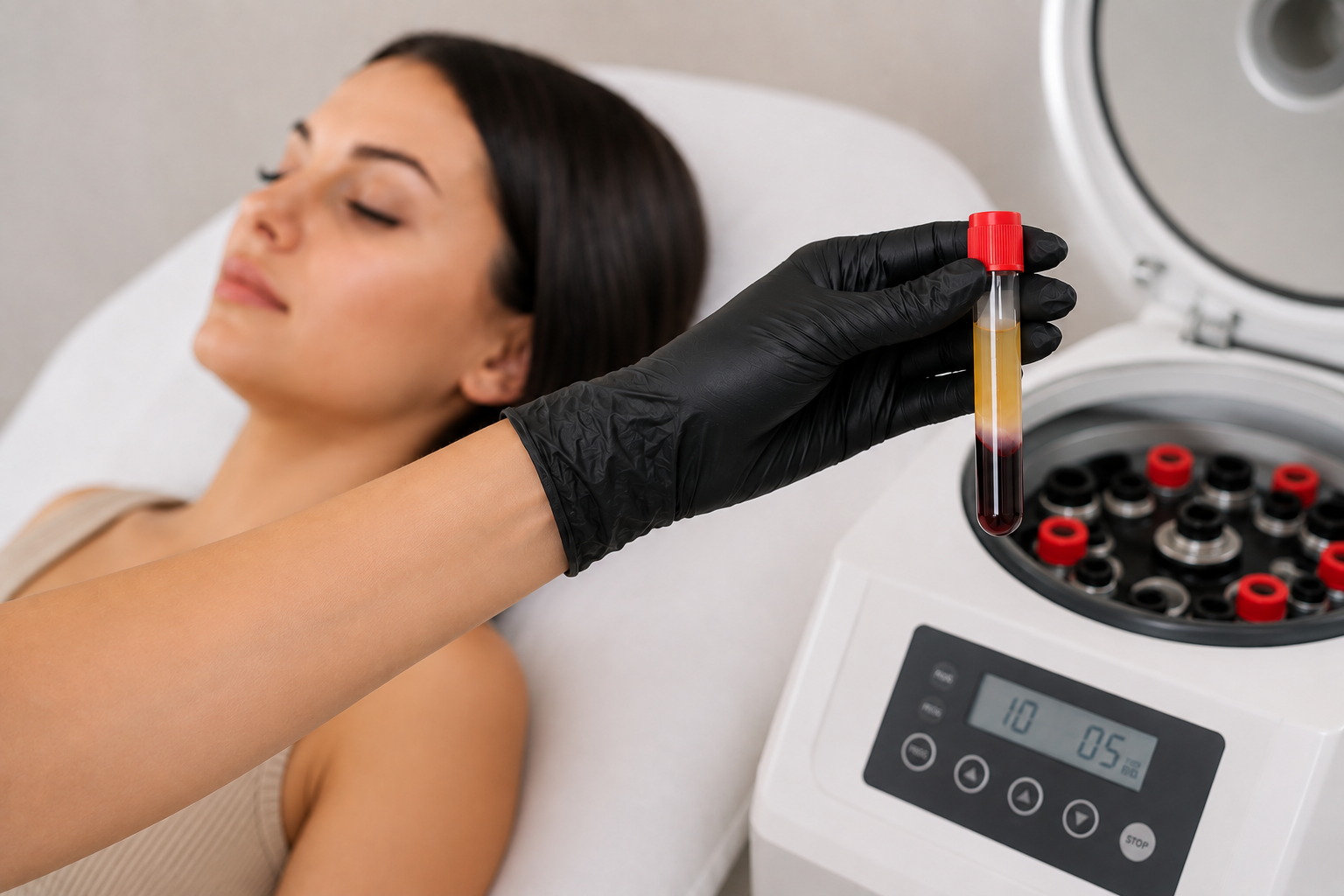
I-PRF, sometimes described as injections made from your own blood, is based on a simple but fascinating principle. A sample of your blood is collected and centrifuged in a special device to isolate platelet-rich fibrin. The resulting material is injected into the skin to support skin quality and its natural regeneration processes.
The aim is not to change the shape of the face or add volume. The focus is on skin quality — its elasticity, structure, thickness and ability to recover.
But how exactly can your own blood affect your skin? This article takes a closer look at everything from the treatment’s mechanism of action to its indications, contraindications and expected results.
I-PRF — injectable platelet-rich fibrin
I-PRF, or injectable platelet-rich fibrin, is a biomaterial derived from blood and characterised by a three-dimensional fibrin network. In addition to platelets and their growth factors, injectable PRF contains type I collagen, lymphocytes and their growth factors.
Platelet-rich fibrin has been studied extensively and is directly associated with tissue healing and regeneration. It is widely used in aesthetic medicine, dentistry, orthopaedics and cosmetic surgery. Platelet-rich fibrin has demonstrated benefits in wound healing, bone regeneration and aesthetic treatments.
In aesthetic medicine, platelet-rich fibrin is used primarily to improve skin quality and appearance and to address hair loss, including the treatment of androgenetic alopecia.
Aesthetic treatments often focus on what can be added to the face, whether that is a filler, botulinum toxin or surgical correction. It is equally important, however, to consider the condition of the skin itself. If the skin is thin, has reduced elasticity or an uneven texture, or has lost some of its quality due to ageing and sun damage, adding volume or taking a surgical approach may not be enough.
This is where a regenerative approach comes in. Before changing facial contours or adding volume, it may be sensible to improve the quality of the skin itself. Scientific literature on platelet-rich preparations has found the most consistent results in improvements to skin thickness and elasticity. The treatment may also support faster healing and recovery of the skin after surgical procedures.
I-PRF in aesthetic medicine
The purpose of an injectable platelet-rich fibrin treatment is to improve skin texture, elasticity and overall appearance.
The growth factors found in platelet-rich fibrin stimulate the production of collagen and elastin. These are important for maintaining the skin’s elasticity and firmness and can therefore help reduce the development of wrinkles.
The aim of aesthetic medicine is not always to fill a wrinkle. Increasing attention is being paid to skin quality and to supporting the tissue’s biological capacity. I-PRF may therefore be suitable for people experiencing:
- reduced skin elasticity
- a decline in skin quality
- fine lines
- uneven skin texture
- uneven skin tone
- thinning skin
An I-PRF treatment should be postponed or avoided if you have:
- an active infection
- a fever
- an inflammatory skin condition in the treatment area
- a blood-clotting disorder
- thrombocytopenia (a lower-than-normal platelet count)
- are pregnant
- are breastfeeding
Is I-PRF treatment safe?
All of the injected material is obtained from the patient’s own blood, so no foreign substance is being injected. This does not mean that the treatment is entirely free from risk. Mild side effects may include:
- redness
- tenderness
- swelling
- bruising
- sensitivity at the injection site
- temporary discomfort
What happens during the treatment?
- The process begins with a consultation. The practitioner explains what I-PRF treatment is, how it works and what side effects may occur.
- A few tubes of venous blood are collected from the patient, just as in a standard hospital blood test.
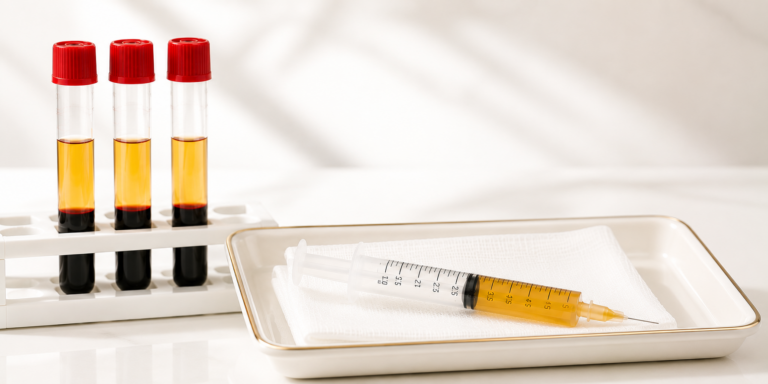
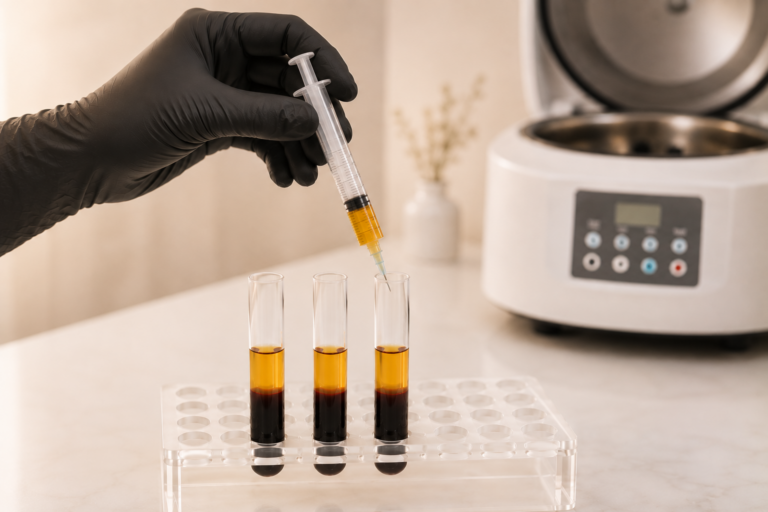
- The patient’s blood is centrifuged in a special device. After approximately five minutes, the blood components have separated and the platelet-rich fibrin is ready for injection.
- The prepared material is injected into the skin according to the patient’s needs and desired results.
- After the treatment, processes related to healing and regeneration begin in the patient’s tissues.
As a starting course, we recommend three treatments at four-week intervals. We then reassess the condition of the skin and the desired results.
Summary
Skin rejuvenation does not always have to mean adding something. I-PRF is based on a different idea: supporting what is already present — the skin’s own natural healing and regeneration processes.
A platelet- and fibrin-rich preparation made from your own blood can help improve skin quality, elasticity and structure. It offers a more natural approach for those who would like to refresh their appearance without changing the shape of their face.
Your skin does not always need more — sometimes it simply needs better support.
You can book an I-PRF treatment here: I-PRF treatment
This article is based on scientific publications. You can read more about I-PRF treatment here:
 Kadaka tee 42b, 12919 Tallinn II korrus
 E-R 09.00 — 17.00
 info@n8r.ee
 +372 59009272