

What is hair thinning
Hair thinning means that the hair strands have become thinner and/or the total number of hairs on the head gradually decreases. This may not immediately cause baldness, but the hair may appear less dense – the circumference around the ponytail is smaller, the scalp may shine in certain light. Thinning can occur evenly over the entire head or more strongly in certain areas (for example, on the crown).
Why is hair thinning?
- Age-related changes: Natural aging leads to miniaturization of hair follicles – each subsequent hair strand grows thinner and shorter. Women often notice after menopause that the hair is finer and the volume decreases.
- Hormonal factors: Women hormonal thinning It may occur, for example, after childbirth (when hair that remained during pregnancy falls out at once – postpartum hair thinning) or in cases of hypothyroidism. In men, thinning often overlaps with genetic baldness.
- Nutrient deficiency: Hair needs several vitamins and minerals to grow. Iron deficiency, lack of vitamin D, protein deficiency or low levels of zinc/biotin can cause the hair growth phase to shorten and the hair strands to become finer.
- Stress and disease: Prolonged stress, major surgeries or chronic diseases can lead to a condition where a large number of hairs enter the resting phase and then fall out (telogen effluvium). Hair will recover, but there may be noticeable thinning in the meantime. However, repeated stress can make this thinning long-term.
How to stop or reduce hair loss
- Causal approach: First, medical causes should be ruled out – check iron levels, thyroid hormones and other indicators. If necessary, correct them (iron supplements, thyroid treatment, etc.). Also review your diet: add protein-rich foods, nuts, seeds, green vegetables.
- Reinforcement supplements: Although there is no miracle pill, there are complexes (biotin, silicon, collagen, B-group) that can stimulate hair roots. Especially if there is a specific deficiency, compensating for it can give a noticeable result (e.g., taking iron supplements for anemia improves hair growth).
- Topical treatment: Similar to treating baldness, minoxidil products can also be used for diffuse thinning – they extend the hair growth phase and may help thicken finer hair. Achieving results takes time and must be consistent.
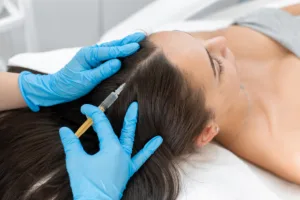
- PRP and mesotherapy: Scalp injections with vitamins, amino acids, and growth factors can provide a ‘nourishing cocktail’ for the hair follicles. PRP (platelet-rich plasma) or mesotherapy (injections of vitamin cocktails) are popular methods for halting hair thinning and stimulating the growth of stronger new hairs.
Improve the appearance of hair when thinning
- Proper hair and care: Trim your hair shorter or get layered cuts – this creates more volume visually. Use volumizing products (shampoos, mousses) and a round brush with a hairdryer to lift the hair roots.
- Gentle handling: Avoid excessive heat styling and chemicals (bleaching, harsh dyes) that can break the already fine hair. For thinning hair, it is especially important to prevent breakage, as each broken hair makes the hairstyle even thinner.
- Wigs and hair extensions: As a temporary solution or for very severe thinning, you can consider hair extensions – there are fine hair fiber powders that are sprinkled on the scalp to hide the shiny scalp, as well as clip-in hair extensions or toppers that instantly add thickness.
If your hair has become thinner and sparser, we can help before the situation worsens.
Make an appointment carboxy or IPRF for your blood injection procedures Help your hair grow stronger and thicker.

 Kadaka tee 42b, 12919 Tallinn II korrus
 E-R 09.00 — 17.00
 info@n8r.ee
 +372 59009272