

What are stretch marks
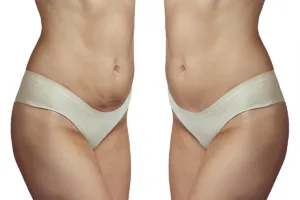
Stretch marks (striae) are linear scars that result from the tearing of the skin’s connective tissue, which appear when the skin stretches too quickly over a short period of time. Initially, these lines are pink, purple, or reddish; over time, they become lighter and pearly-white. Stretch marks are most common on the abdomen, thighs, hips, buttocks, and breasts.
Causes of streak marks
- Pregnancy: During pregnancy, the abdomen grows rapidly and the skin stretches to its maximum, which is why stretch marks often appear pregnancy scars For the stomach and also the chest (as a preparation for breastfeeding, the breasts increase in size).
- Growth periods: Rapidly growing teenagers (especially girls in the hip/breast area and boys in the back/shoulders) may develop stretch marks during puberty when the body dimensions change abruptly.
- Weight gain or loss: Significant weight gain in a short period stretches the skin (and later weight loss highlights the striae that have formed). Bodybuilders who quickly build muscle mass may also develop striae on their shoulders and thighs.
- Hormonal factors: High cortisol levels (e.g., in certain medical conditions or steroid treatment) can weaken the skin’s elastic fibers, promoting the formation of striae even without significant stretching.
Prevention and reduction of stretch marks
- Wetting of the skin during stretching: Although it may not be possible to completely prevent them, keeping the skin elastic helps. During pregnancy and periods of weight gain, it is advisable to moisturize the skin daily with oils (e.g., almond oil, coconut oil) or special stretch mark creams containing vitamins (E, C), silicone, or hyaluronic acid. This may reduce the extent of the striae.
- Gradual change: If possible, avoid very rapid weight gain or loss—slower changes give the skin time to adapt.
How to Treat Existing Stretch Arms
- Laser therapy:
- Fractional laser: Causes micro-damage in the skin that stimulates the production of new collagen and elastin. This helps improve the texture of stretch marks and makes them less visible.
- Vascular laser: For fresh red striae, laser treatment is used, which targets the blood vessels, helping to reduce redness and accelerate fading.
- Microneedling and PRP: Needling therapy creates controlled injuries that promote skin renewal. When combined with platelet-rich plasma (PRP), this procedure can yield even better results by accelerating the filling and color uniformity of stretch marks with the surrounding skin.
- Carboxytherapy: A treatment involving the injection of carbon dioxide into the stretch mark area. CO2 improves blood circulation and collagen remodeling, helping to smooth scars. This is a popular method in our clinic for alleviating stretch marks.
- Chemical peelings: Stronger acid peels (TCA) can help smooth the skin surface and stimulate collagen production in the area of stretch marks, improving their appearance.
- Creams and retinoids: Retinoid creams can slightly improve the texture and appearance of stretch marks with long-term use, especially if the scars are relatively fresh. They work by renewing the skin, but the effect is moderate.
Expectation for reality
- Total disappearance vs. healing: It is important to understand that stretch marks are permanent changes in the skin – it is difficult to completely eliminate them. The goal of treatment is to make them as noticeable as possible (narrower, lighter and more uniform with the surrounding skin). By combining different methods and being patient, you can achieve significant improvement.
If stretch marks reduce your self-confidence, we offer several effective solutions to alleviate them. Book an appointment for a consultationto create a stretch mark treatment plan tailored to your needs and improve the appearance of your skin. Another option is to come in immediately carboxy, which is an effective solution for relieving stretch marks.
 Kadaka tee 42b, 12919 Tallinn II korrus
 E-R 09.00 — 17.00
 info@n8r.ee
 +372 59009272