What is excess fat in body regions
Excessive fat refers to localized fat deposits on the body that are difficult to eliminate despite diet and exercise. These often appear as ‘fat pads’ or fat folds in specific areas — for example, a bulge on the lower abdomen, love handles, inner thighs, upper arms (‘bingo wings’) or even around the knees. These can make the body’s proportions appear unbalanced (creating uneven body outline).
Why does the body develop excess fat
- Genetics and body type: Each person stores fat differently. Some people accumulate fat more easily in the stomach, while others in the hips. Genetic body type determines where ‘stored fat’ is stored.
- Lifestyle: Excessive calorie intake and low physical activity lead to weight gain and fat accumulation. Stress and poor sleep can also disrupt hormone balance, promoting fat accumulation (for example, cortisol and abdominal fat).
- Age and hormones: Over the years, metabolism slows down. Hormonal changes in women (e.g., menopause) promote fat redistribution to the abdominal area. In men, a decrease in testosterone can also affect fat distribution.
- Local problems: Even people of normal weight may struggle with small problem areas that remain after weight loss or pregnancy – for example, a small fat pad on the stomach that simply refuses to go away.
Ways to reduce excess fat
- Nutrition and exercise: General fat reduction comes from a calorie deficit – a healthy diet and regular exercise (cardio for fat burning + strength training to boost metabolism) are the foundation. Unfortunately, you can’t choose where the fat goes (the body decides itself), so spot training won’t get rid of love handles – you need to reduce overall fat percentage.
- Non-surgical body-forming procedures: If weight is normal but stubborn fat deposits remain, aesthetic treatments can help:
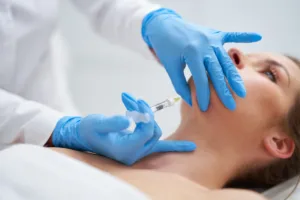
- Injections for fat dissolution: Special injection solutions (e.g., phosphatidylcholine or deoxycholate-containing solutions) are injected into the fat layer of the problem area. This procedure, colloquially called ‘fat removal with injections’, dissolves fat cells, which the body then eliminates through metabolism.
- Cold treatment (cryolipolysis): An apparatus-based method that freezes fat tissue in a controlled manner so that fat cells die. The body then clears away these cells, and the area becomes slimmer. Suitable for areas like the abdomen or sides.
- Ultrasonic and RF lipolysis: Ultrasound cavitation or radiofrequency treatment breaks down fat cells while tightening the skin. This reduces circumference and improves skin tone, preventing sagging after fat loss.
- Surgical variants: A traditional surgical solution is liposuction (liposuction). This physically removes a larger amount of fat using a cannula. Liposuction is an operation with anesthesia and recovery time, so not everyone chooses it. Non-surgical methods are gentler and more gradual, but they are preferred for their minimal intervention.
After fat reduction procedures
- Healthy lifestyle: It is important to understand that regardless of the method, maintaining the result requires a balanced diet and physical activity. If old habits return, remaining fat cells may increase.
- Skin tightening: After fat reduction (especially in larger areas), it is important to pay attention to skin tightening. Skin can be toned with massages, creams, or additional treatments (e.g., radiofrequency) if needed to prevent sagging.
If you are troubled by excess fat deposits that you cannot get rid of despite your efforts, it is time to consider professional body shaping solutions. Make an appointment lipolysis for injections.
 Kadaka tee 42b, 12919 Tallinn II korrus
 E-R 09.00 — 17.00
 info@n8r.ee
 +372 59009272