

What is melasma
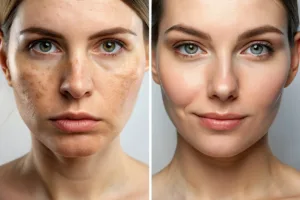
Melasma, also known as the “pregnancy mask,” is a chronic pigmentation disorder that causes grayish or brownish patches to appear on the facial skin. Melasma often occurs symmetrically on the cheeks, forehead, nose, or above the upper lip. It is more common in women (especially during pregnancy, which is why it is also known as the “pregnancy mask”). pregnancy patches, but may also occur in men.
Causes of melasma
- Hormonal factors: Pregnancy, hormonal contraceptives or thyroid disorders can trigger melasma because fluctuations in hormones stimulate the overproduction of melanin in certain areas of the skin.
- Sun: UV-radiation exacerbates melasma. Even minimal sun exposure can darken the patches. Sun exposure is the primary aggravating factor for melasma.
- Genetics: Genetic predisposition plays a role – if melasma has occurred in the family, the likelihood of developing it is also higher.
Effects and specificities of melasma
- The cosmetic aspect: Although melasma does not cause physical pain, it can affect self-confidence. Uneven skin tone in prominent areas (such as the face) often leads many to seek ways to conceal or remove the spots.
- Exacerbation and relapse: Melasma tends to worsen during the summer months and may partially regress in winter. Melasma can also easily recur after treatment if the skin is again overexposed to the sun.
Treatment and alleviation of melasma
- Skin creams prescribed by a dermatologist: The first-line treatment for melasma often includes depigmenting creams such as hydroquinone, tretinoin creams, or azelaic acid. These help reduce melanin production and lighten dark areas.
- Chemical peeling: Gentle chemical peels (glycolic acid, lactic acid) can help remove superficial pigmentation, but caution is needed with melasma to avoid causing inflammation (which can exacerbate pigmentation).
- Laser and IPL treatment: In certain cases, a gentle laser or intense light therapy is used to alleviate melasma. These treatments must be specifically suitable for melasma, as too aggressive a laser can worsen melasma. Newer methods (such as fractional laser at low settings) can provide good results.
Melasma prevention and care
- Strict sun protection: For melasma, daily use of SPF50 and broad-spectrum sun protection (even on cloudy days) is crucial. A hat and sunglasses are necessary additional protections.
- Maintenance routine: Use anti-pigmentation products even after the spots have faded to maintain results. Follow your dermatologist’s advice to reduce the effects of hormones (adjust contraceptive methods if necessary).
If you are troubled by melasma and conventional methods have not helped, consult our specialists. Book an appointment for the mesoestetic cosmelan procedure!
 Kadaka tee 42b, 12919 Tallinn II korrus
 E-R 09.00 — 17.00
 info@n8r.ee
 +372 59009272