warts
corns
keratoses
papillomas
molluscum contagiosum lesions
warts
corns
keratoses
papillomas
molluscum contagiosum lesions
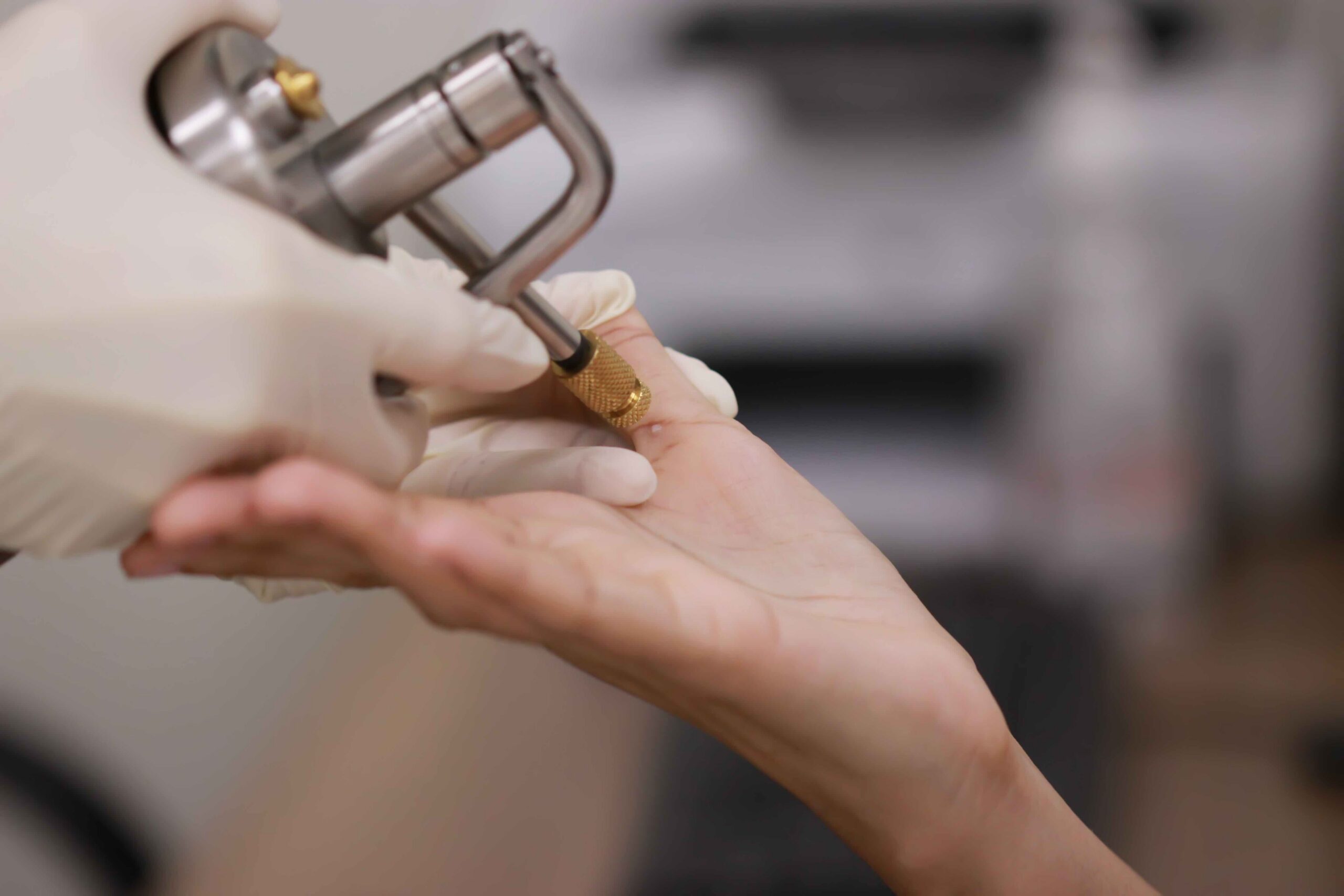
Removing skin lesions (cryotherapy) is a quick and effective way to get rid of warts, papillomas, and other bothersome formations. The procedure uses liquid nitrogen to freeze and safely remove the lesion.
Cryotherapy works with liquid nitrogen to freeze the cells of the skin lesion and stop their further growth. Low temperatures cause intracellular fluid to crystallize, resulting in the damaged cells being naturally destroyed. The procedure is quick, relatively painless, and does not require a long recovery time. The skin usually heals within a few weeks, and new, healthy skin forms in place of the removed lesion. Cryotherapy is well-suited for removing warts, papillomas, and other benign formations.
Consultation (according to the dermatovenerologist consultation price list) – the doctor or specialist assesses the skin lesion and decides whether cryotherapy is a suitable removal method.
Preliminary – The skin is cleansed and, if necessary, a light anaesthetic is applied (depending on the location and size of the lesion).
Cryotherapy – Cryotherapy is a method of removing skin lesions where liquid nitrogen is applied to the lesion using a spray or applicator. The cold temperature destroys the cells of the lesion, and up to 25 lesions can be removed in a single visit. The pricing is based on the number of lesions: up to 5 lesions cost €25, up to 10 lesions cost €50, up to 15 lesions cost €75, up to 20 lesions cost €100, and up to 25 lesions cost €125.
Short-term response – the treated area may turn white, become red, or develop slight blistering, which is a normal reaction.
Healing – the lesion will dry up within a few days, a scab may form, and it will be replaced with new healthy skin in about 1–3 weeks.
Aftercare – If necessary, recommendations will be provided for caring for and monitoring the area to ensure the skin heals quickly and beautifully.
If benign skin conditions (warts, papillomas, fibromas, keratoses).
If formations are cosmetically or physically disturbing (e.g. rubbing against clothes or causing discomfort).
If desired quick and effective removal without surgical intervention.
If not active inflammatory skin diseases the area of the procedure.
If the person is not hypersensitive cold Do not have a cold allergy.
If desired short recovery time and minimal risk of scarring.
If the formation is malignant suspicion or undiagnosed.
If the skin is in the area of the procedure irritated, inflamed or infected.
If cold sensitivity or cold allergy.
If a person has circulatory disorders or poor wound healing (e.g. diabetes, certain skin diseases).
If there is a tendency scarring or keloids.
If the area of the procedure is located in a place where: The cosmetic result may be unfavorable. (e.g. very visible skin area).
If pregnancy or lactation The decision is made individually on the recommendation of a doctor.
The area may become red, develop blisters or be covered with a scab – this is normal.
Do not remove the crust, let it heal itself.
Keep the area clean and dry, and use the cream recommended by your doctor if necessary.
In the sun, use an SPF 50+ protective cream.
If you experience severe pain, inflammation, or delayed healing, consult your doctor.
Results are usually seen already for a few daysWhen the formation begins to dry and darken. About 1-2 weeks The lesion may fall off or significantly regress. Permanent healing and the development of new healthy skin typically occur 2 to 4 weeks, depending on the size and location of the formation.
 Kadaka tee 42b, 12919 Tallinn II korrus
 E-R 09.00 — 17.00
 info@n8r.ee
 +372 59009272
© 2026 NOOR Aesthetic Clinic. Privaatsuspoliitika | Terviseameti tegevusluba: L07048