

What is cuproosa and rosacea
Couperose and rosacea refer to a chronic skin condition characterized by persistent facial redness. Rosacea is the medical term for a condition involving redness, dilated blood vessels, and often small pimple-like bumps on the face. Kuperoosa is a colloquial or historical term for a milder form of rosacea – it primarily involves superficial redness and broken capillaries on the cheeks and nose without significant inflammation.
Causes and triggers of cuprose/rosacea
- Genetic predisposition: Many cases of rosacea are familial, meaning that blood vessels react hypersensitively to certain stimuli.
- Dismissive factors: Hot drinks, spicy food, alcohol (especially red wine), extreme temperature fluctuations, sun exposure, and stress can trigger a rosacea flare-up—causing facial redness and itching. Cold weather can also exacerbate couperose as blood vessels continuously dilate and constrict.
- Skin barrier: Sensitive skin and a weakened skin barrier can contribute to the development of rosacea – the skin becomes more easily irritated and blood vessels react with inflammation.
Symptoms of rosacea
- Permanent redness: Unlike temporary redness, in rosacea the redness (especially on the cheeks, nose, chin, and forehead) is a persistent or recurring phenomenon.
- Visible capillaries: Frequently, fine red blood vessels can be seen on the skin surface, especially around the cheeks and nose (this is a characteristic of rosacea).
- Punes and inflammation: In some forms of rosacea (papulopustular rosacea), acne-like pimples develop on reddened skin. The skin may also itch or feel hot.
Mitigation of cuprose and rosacea
- Daily care: Use gentle, fragrance-free and alcohol-free cleansing products. Moisturize your skin with soothing creams containing ingredients such as aloe vera, chamomile or niacinamide – these help reduce redness. Avoid hot water when washing your face.
- Medical treatment: A dermatologist may prescribe topical treatments (metronidazole, azelaic acid) or oral medications for more severe cases of rosacea. It is important to follow the doctor’s instructions, as rosacea is a chronic condition requiring ongoing management.
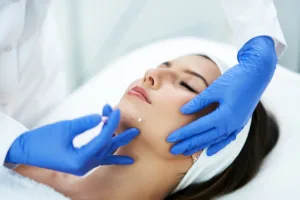
- Laser and IPL treatment: The clinic can rosacea Use laser or intense pulsed light (IPL) therapy, which targets the closure of dilated blood vessels. These procedures help reduce redness and remove capillaries caused by rosacea, evening out the complexion.
Lifestyle and prevention
- Avoidance of laymen: Learn to identify your triggers for redness and try to minimize them – for example, consume spicy food and alcohol in moderation, protect yourself from strong wind and cold with a scarf, avoid very hot saunas.
- Sunscreen: In the case of rosacea, the skin is particularly sensitive to UV light. Use sunscreen daily to prevent sun-induced irritation and the formation of new blood vessels.
If you suffer from persistent facial redness or rosacea, you do not have to accept this as a fact. Book an appointment Redermalisation for maintenance – We help create a treatment plan and perform necessary procedures to reduce redness and improve skin comfort.
 Kadaka tee 42b, 12919 Tallinn II korrus
 E-R 09.00 — 17.00
 info@n8r.ee
 +372 59009272