

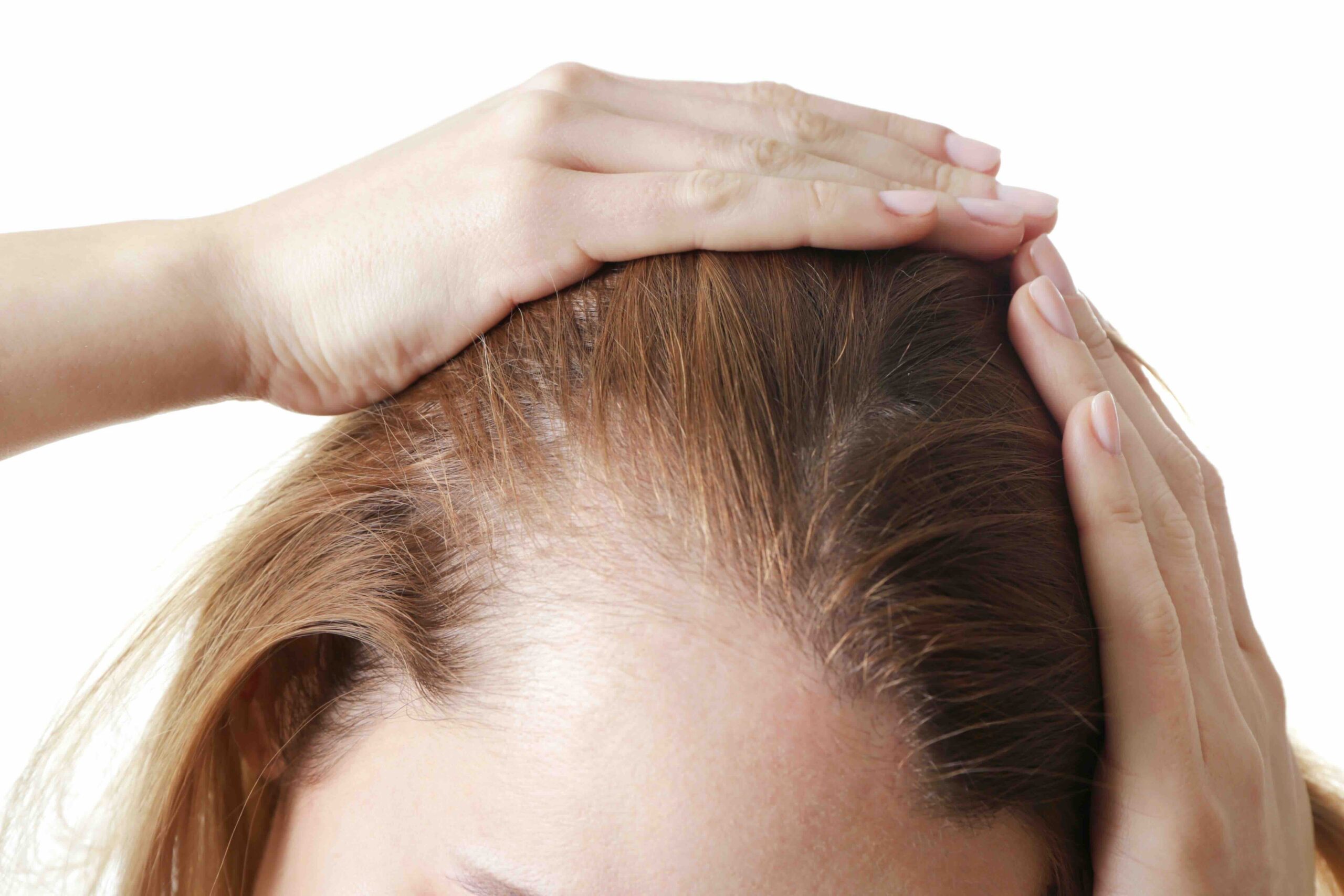
Have you noticed that more and more hair is left on the comb when you brush your hair or that the scalp is more visible on the top of your head than ever before? Why does hair thinning occur?
Hair thinning This is a condition that affects both women and men and can begin at any age. Although it does not directly threaten health, it often significantly impacts self-confidence and quality of life.
The good news is that hair thinning is not always a permanent process—in some cases it can be slowed or even reversed if the causes are known and action is taken early. As a nurse in aesthetic medicine, I see every day how a science-based approach and consistent care help patients regain thicker hair.
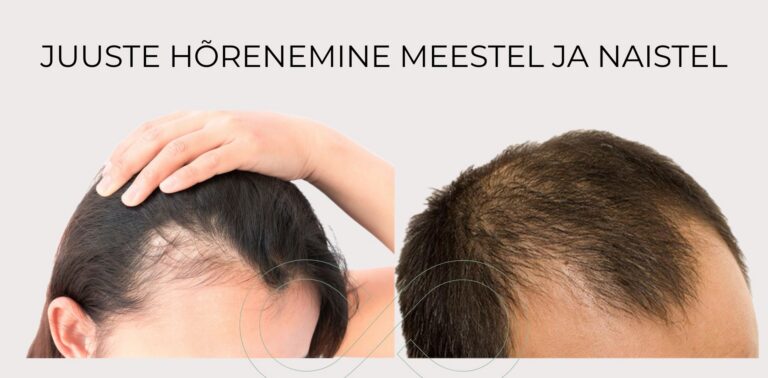
Thinning hair – what causes it and how can it be prevented?
Hair thinning is usually not the result of a single cause – several factors often play a role at the same time.
1. Genetic predisposition
The most common cause is a hereditary predisposition, or androgenetic alopecia. In this case, the hair follicles are sensitive to dihydrotestosterone (DHT), a derivative of the male sex hormone. Under the influence of DHT, the follicles become progressively smaller and produce thinner and shorter hairs. Source
2. aging and hair follicle weakening
Over time, cell renewal slows down and hair follicles become less active. The growth phase of the hair (anagen) shortens and the shedding phase lengthens. This means fewer new hairs are produced than those that fall out.
3. Hormonal changes
Pregnancy, childbirth, or thyroid problems can cause temporary or more permanent hair thinning. For example, after childbirth, estrogen levels drop sharply, leading to significant hair loss (known as postpartum hair loss).
4. Environmental factors and lifestyle
UV radiation, smoking, nutrient-poor diet or chronic stress can accelerate the aging of hair follicles and reduce their ability to grow new hair. A study has also been conducted in this area, finding that UV radiation directly damages the DNA of hair follicles and accelerates their aging. Survey reference
If hair thinning is not genetic – how to support your body?
If it is not androgenic alopecia that is hereditary, hair thinning is often temporary and related to the body’s condition. In this case, it is important to understand what exactly the deficiency or imbalance arises from – only then can the correct supportive approach be chosen.
1. Nutrients and vitamins
Hair follicles are highly active cells that require constant energy and nutrients. Deficiencies quickly reflect in hair quality.
-
Iron – iron deficiency (even without anemia) is one of the most common reasons for hair thinning, especially in women.
-
Vitamin D – affects the hair follicle growth cycle. Low vitamin D levels are associated with a higher risk of hair loss.
-
Vitamins of group B (especially biotin, B12, folate) necessary for energy production and cell division.
-
Zinc and selenium – minerals that support hair shaft structure and follicle function.
Tip: If you suspect a deficiency, it is worth taking blood tests before taking supplements – this will help you avoid excess and accurately determine your body’s needs.
A study published in 2019 in the journal Dermatology and Therapy It confirmed that low levels of vitamin D and iron are significant risk factors for hair loss, especially in women. Survey reference
2 Tests to check in case of hair thinning
If hair loss is greater than normal, it is advisable to consult a general practitioner or specialist and request the following tests:
-
Ferritin (iron stocks)
-
Vitamin D level
-
Thyroid hormones (TSH, FT4, FT3)
-
B12 and folate
They provide an initial assessment of whether the cause may be a nutrient deficiency or hormonal imbalance.
3 Lifestyle Factors That Play a Role
-
Stress – prolonged stress increases cortisol levels, which can lead to temporary hair loss.
-
Sleep – restorative processes, including hair-follicle activity, take place during deep sleep.
-
Balanced nutrition Fresh and varied food is the best “food supplement.”
Professional solutions for hair loss
If tests are normal or home treatments do not provide sufficient improvement, there are several effective clinical procedures that can help stimulate hair follicle function and reduce hair loss.
1. Microneedling on the scalp
Microneedling creates microchannels in the scalp that:
-
improve blood circulation and oxygen delivery to hair follicles;
-
activate the production of growth factors;
-
enhances the absorption of hair growth-stimulating serums.
2. iPRF or “own blood injections”
iPRF (injectable Platelet-Rich Fibrin) involves extracting a concentrate from the patient’s own blood that contains growth factors and stem cells, which we inject into problem areas of the scalp.
-
stimulates hair follicles;
-
improves their blood supply;
-
it inhibits hair loss and promotes new hair growth.
This procedure is natural because it uses the body’s own resources without synthetic additives. You can read more about iPRF here from here.
3. LED light therapy
The blue and red lights have shown that they:
-
reduce inflammation of the scalp;
-
stimulate the production of follicle energy;
-
prolong the growth phase of hair.
4. Personalised treatment plan
Hair thinning is always individual. The best result is achieved by combining:
-
home steps (nutrition, vitamins, tests);
-
clinical procedures (micron needling, iPRF, LED);
-
Specialist advice for home care.
At the NOOR beauty clinic, all specialists have a medical education, so we can certainly provide the necessary advice regarding both analyses and the selection of various procedures.
The best-known myths about hair thinning
| Myth | Reality |
|---|---|
| “Cutting hair makes them fatter.” | Hair cutting does not affect the hair follicle or growth. The cut hair tip simply appears stronger and more uniform. |
| “Only men experience hair thinning.” | Hair thinning also affects women – often due to hormonal changes, stress or nutrient deficiencies. |
| Hair loss is always permanent. | Many cases of hair thinning (e.g., due to stress or vitamin deficiency) are temporary and reversible with the right treatment. |
| “All supplements stop hair thinning.” | Supplements only help if the cause is a real deficiency. Excessive use can even be harmful. |
What can you do at home to support slowing hair thinning?
| Step | Why is this important? | Recommendation |
|---|---|---|
| Gentle scalp cleaning | Clean scalp supports hair follicle function and reduces inflammation. | Use a sulfate-free shampoo and wash your hair 2–3 times a week as needed. |
| Scalp massage | Improves blood circulation and oxygen delivery to hair follicles. | Massage with your fingertips 3–5 minutes before washing or using oil. |
| Balanced nutrition | Hair needs proteins, vitamins, and minerals to grow new hair. | Eat foods rich in iron, zinc, vitamin D, and B vitamins. |
| Stress reduction | Prolonged stress can lead to temporary hair loss (telogen effluvium). | Practice breathing techniques, exercise regularly, and sleep 7–8 hours. |
| Limitation of heat and chemical treatment | Excessive heat and chemicals damage the hair shaft and may worsen thinning. | Use a lower heat setting on your hairdryer and avoid frequent chemical treatments. |
| Regular specialist follow-up | Helps monitor changes and adjust maintenance. | Consult an aesthetic medicine specialist at least once a year. |
Summary: Hair loss doesn’t have to be permanent.
Hair thinning There is a concern that may seem daunting at first, but in reality, there are many ways to slow it down and even partially reverse it. It is important to understand that this is not always genetic or permanent – often the cause lies in nutrient deficiency, hormonal imbalance, or lifestyle factors.
Home steps such as a balanced diet, proper scalp care and stress reduction create a strong foundation for hair health. However, professional solutions – such as microneedling, iPRF and LED light therapy – can provide an extra boost to hair follicle function and accelerate results.
But the most important thing is act early. The earlier you pay attention to hair thinning, the better the results will be.
If you feel that hair thinning is affecting your self-confidence or daily well-being, come for a consultation – together we will find a plan that supports both your hair and overall well-being.
 Kadaka tee 42b, 12919 Tallinn II korrus
 E-R 09.00 — 17.00
 info@n8r.ee
 +372 59009272