

What is sun protection and why is it important?
In this blog post, you’ll find out why you should use sunscreen every day and which sunscreen might suit you.
Sun protection is not just a summer topic – it is the foundation of year-round skin care! Although most of us know that the sun can cause burns, not everyone is aware of how different types of radiation actually affect the skin.
Excessive solar radiation can lead to premature aging, pigment spot and increase skin cancer risk.
Sun protection includes wearing protective clothing and sunglasses in addition to using sunscreen!
UVA, UVB, UVC and HEV – What are they?
Solar radiation is not uniform—it is divided into different types of radiation, each of which has a different effect on the skin. The main types of ultraviolet radiation are UVA, UVB, and UVC. In addition, we are also exposed to HEV radiation, also known as blue light.
UVA radiationUVA radiation with a wavelength of 315-400 nm penetrates deeply into the dermis. UVA radiation causes oxidative stress, degrades collagen, and causes pigmentation changes. UVA radiation is the main cause of premature skin aging, causing wrinkles, loss of elasticity, and pigment spots. UVA rays penetrate clouds and window glass, thus affecting the skin all year round.
UVB radiationUVB radiation with a wavelength of 290-320 nm damages the DNA of the epidermis cells, causing erythema (redness), carcinogenic mutations and weakening of the immune system. UVB radiation is the main cause of sunburn and plays a significant role in the development of skin cancer. Additionally, radiation promotes the synthesis of vitamin D, which strengthens the body’s immune system. UVB radiation is most intense during the summer months.
UVC radiationUV-C radiation with a wavelength of 100–280 nm is the shortest wavelength and potentially the most dangerous, but fortunately it is absorbed by the ozone layer and does not reach the ground under normal conditions. Caution is required when using a solarium, as it may be overused.
HEV radiation Blue light, which is high-energy visible light, comes mostly from sunlight, but we are increasingly exposed to screens, phones, and TVs that emit blue light. Screens are closer to the skin than sunlight, so HEV light has a direct effect on the skin. The wavelength of HEV light is 400-700nm. It is considered a primary cause of hyperpigmentation and erythema. Visible light activates melanocytes, increasing the risk of melasma and post-inflammatory hyperpigmentation.
Types of sun protection – mineral, chemical and natural
Mineral sunscreen
Mineral or physical sunscreen typically contains zinc oxide or titanium dioxide. These substances work by reflecting and scattering UV radiation. Mineral sunscreen provides immediate protection and may leave a slight white cast. A thicker texture may be better suited for sports or to ensure water resistance.
Chemical sunscreen
Chemical sunscreen consists of chemical filters (e.g., avobenzone, oxybenzone) that absorb UV radiation and convert it into heat, which is then released from the skin. Chemical sunscreen is often preferred due to its light texture that absorbs into the skin, leaving little to no visible residue. When using chemical sunscreen, it is important to remember that the product needs about 20 minutes to absorb!
Natural sun protection
Natural sun protection typically relies on plant-based ingredients and minerals. These are often combined with mineral protection. For natural products, the SPF may be lower, so it is important to carefully check the product’s actual SPF level.
Additionally, there are also products on the market that combine natural ingredients with mineral protection. tinted sunscreen creams, which contain added pigments (e.g., iron oxide and pigmented titanium dioxide). Tinted sunscreens primarily protect against UVA, UVB, and visible light and help to more effectively prevent hyperpigmentation. Additionally, tinted sunscreens provide more even coverage because the tint gives the skin a light makeup effect, which is why people often apply them in a thicker layer and more evenly.
When and how to use sunscreen?
Sun protection should be used according to UV radiation, not just on sunny days. The UV index is a standardized measure that predicts the intensity of skin-damaging UV radiation depending on latitude, season, ozone level and cloud cover.
The effectiveness of sunscreen is measured by SPF (sun protection factor). SPF indicates how much longer it takes for UVB radiation to cause redness on skin protected by sunscreen compared to unprotected skin. A sunscreen with SPF 15 blocks 94%, SPF 30 97% and SPF 50 about 98% of UVB radiation.
The general recommendation is to use a broad-spectrum sunscreen with SPF 50 daily 20 minutes before going out in the sun. The teaspoon rule should be used: one teaspoon (5ml) for each arm, leg, back, stomach and face (including neck and ears), so at least 35ml for full-body coverage.
Sunscreen should be reapplied every 2 hours and after swimming or sweating.
How to choose the right sunscreen for your skin type?
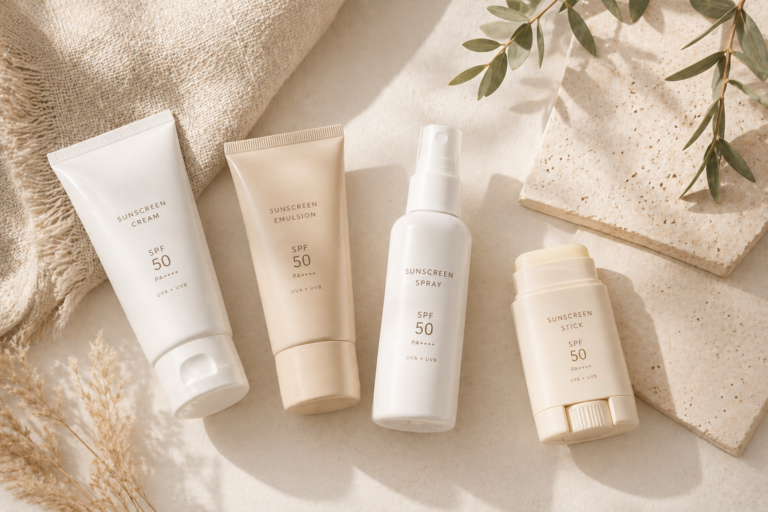
There are various types of sunscreen products: emulsions, creams, sprays and sticks. Making the right choice can be difficult. In fact, when choosing a product, you should primarily consider your skin type.
For normal skin Suitable options include lighter-textured emulsions or classic creams that moisturize without leaving the skin feeling heavy.
Pregnant and acne-prone skin In case of sensitive skin, it is advisable to use lightweight, non-comedogenic gels or lotions that do not clog pores and help regulate sebum production.
Dry skin In case of sensitive skin, it is advisable to choose sunscreen that contains moisturizing and skin-repairing ingredients. Such products help prevent skin irritation and flaking while providing deeper hydration in addition to sun protection.
Combined leather Products with a balanced composition work well—light creams, gels, and emulsions that moisturize drier areas without making the T-zone oily.
When the skin is sensitive Priority should be given to fragrance- and alcohol-free mineral filter sunscreens that are gentle and do not irritate the skin.
The Most Popular Myths About Sunscreen
Myth– Sunscreens are only intended for people with fair skin.
The truth– UV radiation is the main risk factor for skin cancer and photoaging in all skin tones. UV radiation promotes skin damage regardless of the level of existing skin pigmentation.
MythSunscreen damages the endocrine system.
The truth– There is no evidence of endocrine system disorders from the use of sunscreens.
Myth– Sunscreens contain carcinogenic and toxic particles.
The truth– UV filters such as zinc oxide and titanium oxide are usually used in sunscreens in the form of nanoparticles that penetrate only the stratum corneum, the layer containing dead skin cells.
MythSunscreens cause vitamin D deficiency.
The truth– although sunscreen may theoretically reduce vitamin D synthesis due to overlapping UV radiation spectra, various observational studies have shown little or no significant effect on vitamin D levels.
Our favorites
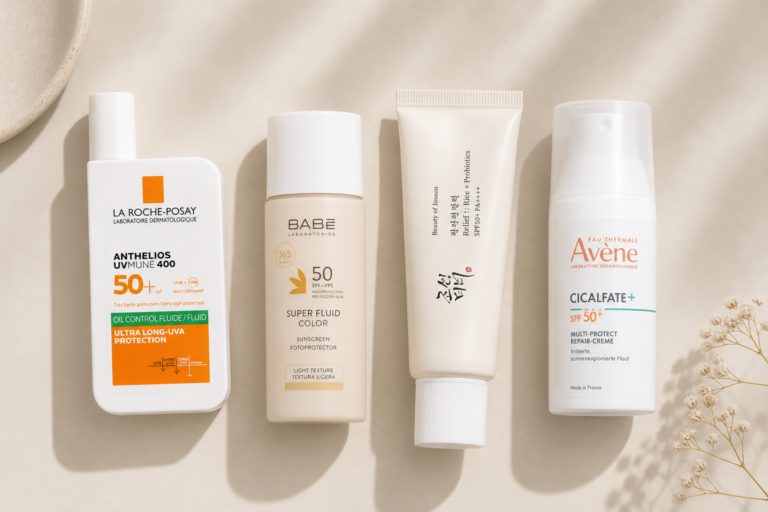
Agve favorite: La Roche-Posay Anthelios UVMUNE 400 Invisible Fluid
Kristel favorites: La Roche-Posay Anthelios UVMUNE 400 Invisible Fluid, Babe super fluid color emulsion for face SPF 50.
Laura favorites: Beauty of Joseon Relief Sun: Rice + Probiotics Cream SPF 50, Avene Cicalfate+ cream restores SPF 50.
Summary
Effective sun protection requires a daily and comprehensive approach.
Using year-round sun protection is not just a summer recommendation but an important part of daily skin care. Regular use of sun protection helps prevent the formation of wrinkles as well as more serious skin damage, including skin cancer. It is important to remember that sun protection is not only necessary in the summer at the beach or on vacation but also when walking in the city, driving a car or staying near a window indoors!
Consistent use of sun protection is one of the simplest and most effective ways to maintain your skin’s health and youthfulness, and thanks to the wide range of products available, no one has to compromise in this area!
Blog post is based on scientific article, more information about sun protection can be found:
 Kadaka tee 42b, 12919 Tallinn II korrus
 E-R 09.00 — 17.00
 info@n8r.ee
 +372 59009272