

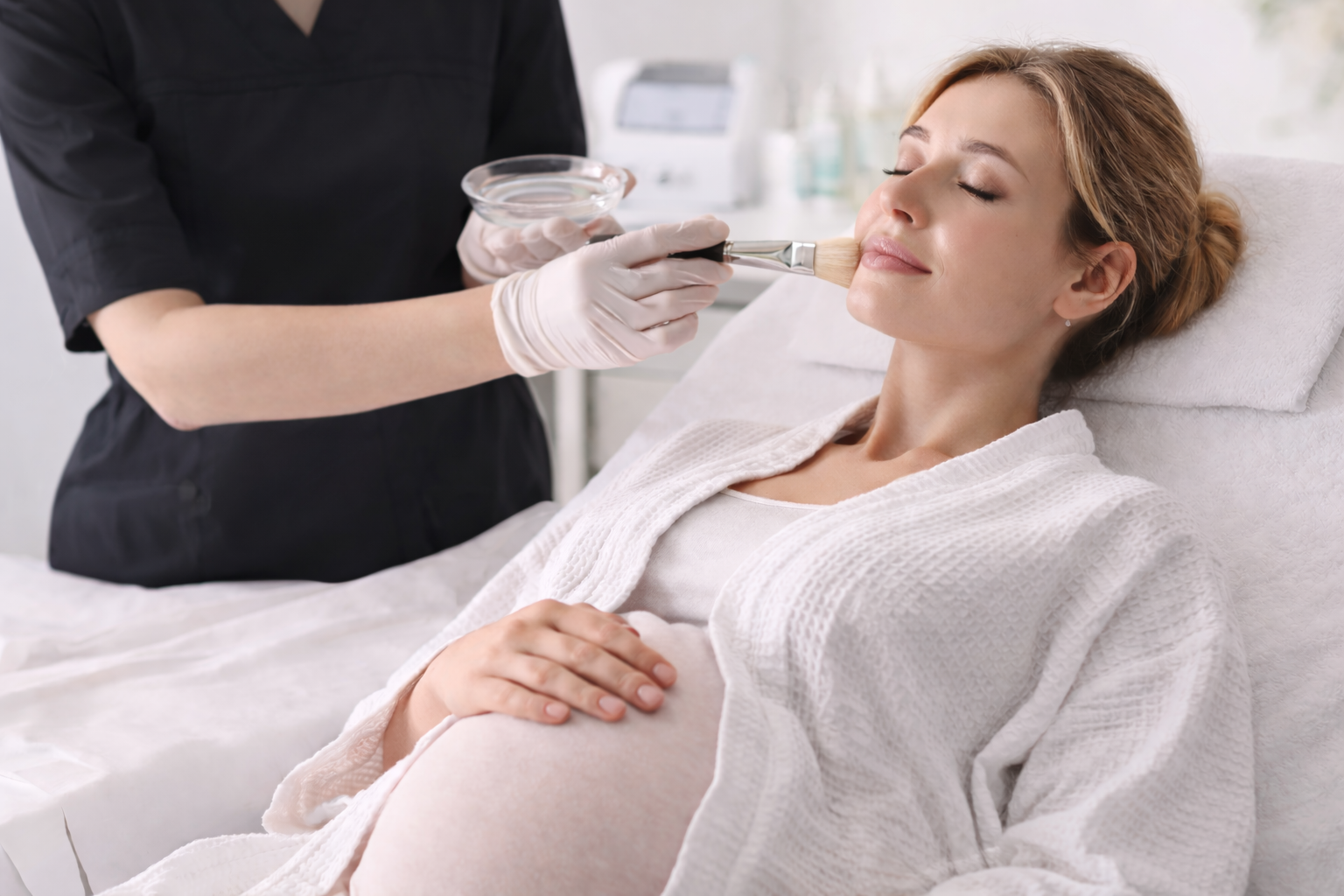
A woman’s body undergoes physiological and hormonal changes during pregnancy. Increased hormone levels affect the production and distribution of melanin in the skin, especially on the face. Hormonal changes can cause concerns such as hyperpigmentation, redness, acne and increased skin sensitivity.
Caring for the skin during pregnancy is important. Acid peels should be selected together with a specialist and according to the condition and concerns of the skin. Choose a professional who understands acids and their implications during pregnancy. Working with a specialist makes it possible to select an appropriate peel, concentration and exposure time and thereby reduce the risk of irritation. This allows a peel to be tailored to the skin’s sensitivity during pregnancy and to achieve the best possible result safely.
Below is an overview of common acids and their effects on the skin during pregnancy.
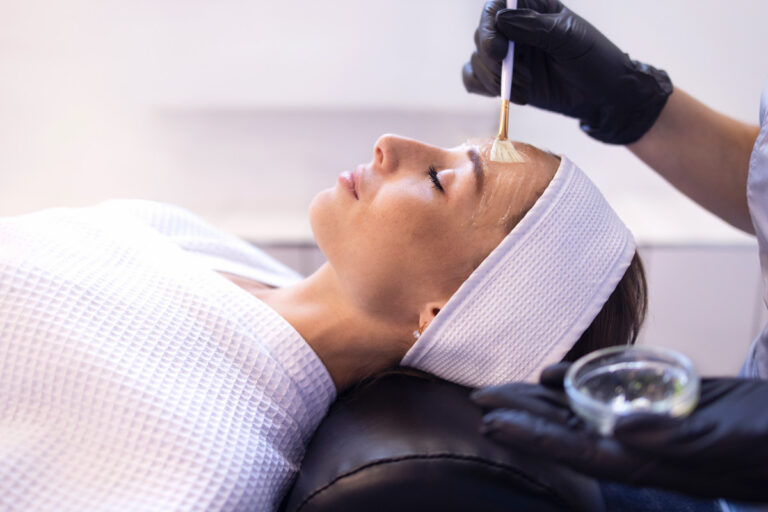
Glycolic acid
Glycolic acid is an AHA that exfoliates the outer layer of the skin, accelerates cell renewal and can help reduce pigmentation and acne. Because of its mechanism of action and limited absorption, glycolic acid is generally considered compatible with pregnancy. It acts locally, meaning that it works where it is applied.
Lactic acid
Lactic acid is an AHA that gently exfoliates and hydrates the skin and is well suited to sensitive skin. In dermatology, it is regarded as one of the gentler options during pregnancy because it acts on the surface of the skin and is a substance that also occurs naturally in the body.
Azelaic acid
Azelaic acid is a naturally occurring acid used to even skin tone, clear pores and reduce acne and inflammation. It is generally regarded as one of the more suitable acids during pregnancy and is also used by dermatologists to treat pregnancy-related acne.
Mandelic acid
Mandelic acid is an AHA used to even skin tone, smooth fine lines and improve firmness. Its larger molecule enters the skin more slowly, which reduces the risk of irritation. During pregnancy, mandelic acid is one of the acids more commonly selected for both home care and professional clinic treatments.
Jessner’s solution
Jessner’s solution combines salicylic acid, lactic acid and resorcinol, an antioxidant. Because it combines several active ingredients, it is highly effective and produces strong exfoliation. It is preferable to avoid Jessner’s solution during pregnancy because the skin is more sensitive and the risk of inflammation, hyperpigmentation or irritation is higher.
Acids in home skincare
Gentle AHAs may be used in home skincare during pregnancy as superficial exfoliants that remove dead skin cells and improve skin quality. Common options include glycolic, lactic, azelaic and mandelic acids. A small amount of salicylic acid may be used on a limited problem area.
The importance of sun protection during pregnancy
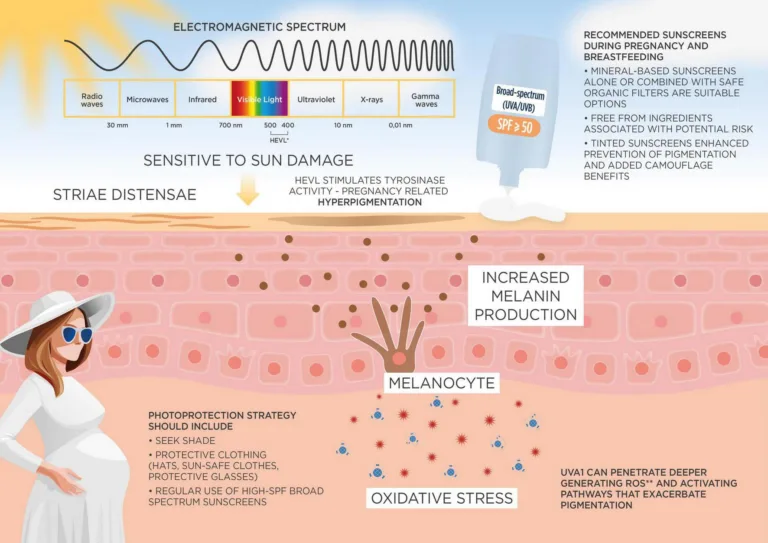
Daily sun protection is particularly important during pregnancy. Increased sensitivity to longer-wavelength radiation calls for prevention and protection. Broad-spectrum sunscreen that protects against UVA, UVB and HEV radiation in addition to providing an SPF is recommended.
The illustration below explains the importance of sun protection during pregnancy and offers practical recommendations:
NOON Aesthetics glycolic acid treatment
NOON Aesthetics™ is designed as an effective, skin-friendly treatment with minimal irritation. It offers high-concentration and clinically tested solutions for different skin concerns. Its patented DermShield™ technology allows potent active ingredients and acids to be used while reducing irritation. The result is an effective and carefully controlled treatment suitable for different skin types, including during summer, as it does not damage the skin’s outer layer.
Treatment stages:
- Skin analysis – assessing the condition of the skin and contraindications.
- Preparation – deep cleansing followed by DermShield™ solution to improve acid tolerance and minimise irritation.
- Application of the acid.
- Neutralisation of the acid.
- Application of an ampoule selected for the skin concern.
- Massage to help the ampoule absorb.
- Mask.
- Finishing cream.
Thanks to DermShield™ technology, the treatment is gentle and suited to different skin types. Results are visible immediately: the skin appears fresher and more radiant. Redness and mild flaking are uncommon.
Summary: pregnancy and acid peels
The skin may become more sensitive during pregnancy. Hormonal changes can cause concerns such as hyperpigmentation, acne and dryness.
A common question is: ‘Are acid peels safe during pregnancy?’
Gentler acids, including AHAs such as glycolic, lactic, azelaic and mandelic acid, are generally considered suitable in low concentrations. They gently exfoliate, improve texture and reduce skin concerns. Higher-concentration peels may also be performed by a specialist who selects the right acid for the skin and provides guidance on both the treatment and home care.
The most important and often underestimated consideration is sun protection. Acid peels make the skin more sensitive to the sun, so using broad-spectrum sunscreen every day, regardless of season or weather, is essential. Sun protection helps prevent pigmentation, preserve the skin barrier and support the effect of skincare treatments.
This article is based on scientific publications. More information about treatments during pregnancy:
 Kadaka tee 42b, 12919 Tallinn II korrus
 E-R 09.00 — 17.00
 info@n8r.ee
 +372 59009272