

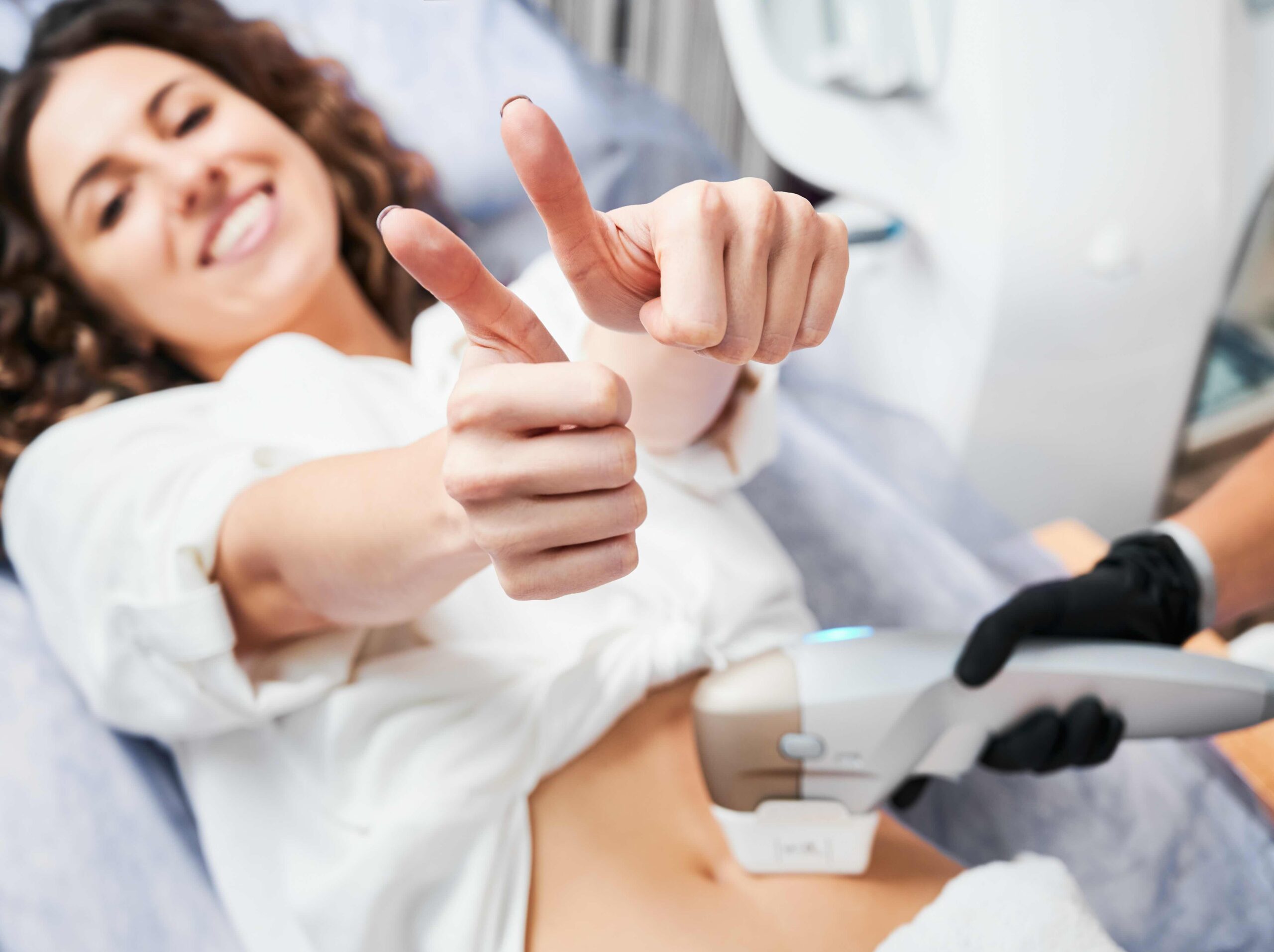
Are you 25? Or 55? And wondering whether it is already too late – or far too early – to see an aesthetic medicine specialist?
This is a question I hear often: when should you see an aesthetic medicine specialist? Some people come for the first time at 23, others at 60.
The truth is that the ‘right time’ is not determined by age, wrinkles or an ideal skin type. People do not come to our clinic merely to ‘fix’ something. They come for advice, support and care so that they can genuinely look after their skin well. That is valuable at every stage of life and at every age.
What actually happens to skin over time?
Skin ageing does not begin when the first wrinkle appears. It starts much earlier, often unnoticed.
From around the age of 25, the body’s production of collagen and elastin, which affect the skin’s firmness and elasticity, begins to decline.
Cell renewal also slows, while the skin loses moisture, becomes thinner and grows more sensitive to environmental influences.
UV radiation, stress, lack of sleep and inflammation – even low-level inflammation that you do not notice – accelerate this process. This is also called extrinsic or external ageing, and it is the part we can influence.
One review reported that the skin’s collagen content falls by about 1% a year from the age of 25, while UV radiation substantially increases the activity of collagen-degrading enzymes called MMPs, leading to a loss of skin elasticity and density. Research reference.
Aesthetic treatments that support the skin’s own recovery, such as i-PRF, do not ‘stop the clock’. They can, however, help the skin remain firm, even and calm for longer – not only on the surface but at a deeper level too.
That is why it is worth thinking preventively and finding out when to see an aesthetic medicine specialist before these changes become visible.
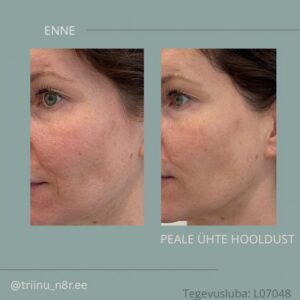
What does this mean for your skin?
These changes – declining collagen, slower cell renewal and a weakening skin barrier – do not always appear immediately as visible wrinkles or pigmentation. The first signs are often much subtler:
tired-looking skin, a dull complexion, increased sensitivity or skin that no longer recovers as quickly as it once did.
Because these processes are already taking place at cellular and tissue level in early adulthood, it makes sense to approach skincare consciously and preventively.
Aesthetic treatments are not designed only to improve a problem area. They can also be regular supportive interventions intended to maintain the skin’s functional balance.
What professional skincare does – and what it means for your skin
Professional skincare helps identify and balance processes before they lead to lasting changes. This is the essence of modern aesthetic medicine: not changing the skin, but supporting it.
So when is the right time to come in?
Now that you know what your skin experiences over time, we can return to the original question: when is the right time to see an aesthetic medicine specialist?
There is no single answer. Every person and every person’s skin are different. The right time may be:
when you notice the first changes that you cannot explain yourself
when you want to prevent bigger concerns instead of waiting for ‘something to happen’
when you feel that you have simply ‘lost touch’ with your skin
or when you would like a professional to help you make better-informed choices
Aesthetic medicine is not only about ‘improving beauty’. Our role is to understand your skin’s condition, explain what it truly needs and support you at every stage – not only afterwards, but also through prevention.
Real-life examples – when clients came to see us
Here are a few situations in which clients felt that they needed support:
A 26-year-old woman who noticed that her facial skin looked tired
She no longer liked the way make-up sat on her skin. She did not want injections or a ‘new face’; she simply wanted freshness and improved skin texture.
➡️ We helped calm her skin and support cell renewal with regenerative treatments: a course of i-PRF combined with microneedling, plus a discussion of home care.
A 32-year-old mother of two who had never visited an aesthetic medicine specialist
She did not want to ‘look younger’; she simply wanted to feel more like herself again.
➡️ We began with a skin analysis, followed by an acid peel and biorevitalisation, and helped her establish the habit of using SPF.
A 55-year-old woman who simply asked: ‘Is it too late to start now?’
It was not. It never is. Her skin responded very well to treatment. The result was not a ‘new person’, but a brighter, healthier appearance and greater confidence in her own skin.
What can you expect when visiting an aesthetic medicine specialist?
If you have never visited one before, knowing what to expect often makes it easier to take the first step.
At our clinic, everything begins with a consultation.
It is a calm and considered meeting in which we:
-
review your skin’s condition and needs
-
discuss your expectations, concerns and questions
-
explain what would truly suit your skin, rather than being guided by trends or marketing
-
make a plan: whether anything needs to be done at all, how often and how you can support your skin at home
A consultation is valuable even if you decide not to do anything immediately. It gives you an informed understanding of your skin – and that is already a major step forward.
It does not have to be a big change.
Aesthetic medicine has developed enormously in recent years. Today, the focus is much more on skin health, not only its appearance. Modern treatments such as i-PRF, biorevitalisation, exosomes, microneedling and deep skin hydration do not force the skin to do something. They support what the skin itself is trying to do: heal, recover and renew.
The results are not dramatic; they are lasting.
You will not see a ‘new face’.
You will see yourself again – fresher and more rested.
If something in this post felt familiar – whether tired-looking skin, an uncertain routine or simply the feeling that you need advice on caring for your skin better – know that you are not alone. This is exactly why we do this work.
You do not have to arrive with a firm decision to have a treatment. Wanting to understand how your skin is really doing is enough. Sometimes it all begins with a single conversation.
If you have wondered when to see an aesthetic medicine specialist but have not dared to ask, CONTACT US HERE.
We will welcome you calmly, without pressure to have an immediate treatment, and help your skin feel good again.
 Kadaka tee 42b, 12919 Tallinn II korrus
 E-R 09.00 — 17.00
 info@n8r.ee
 +372 59009272