

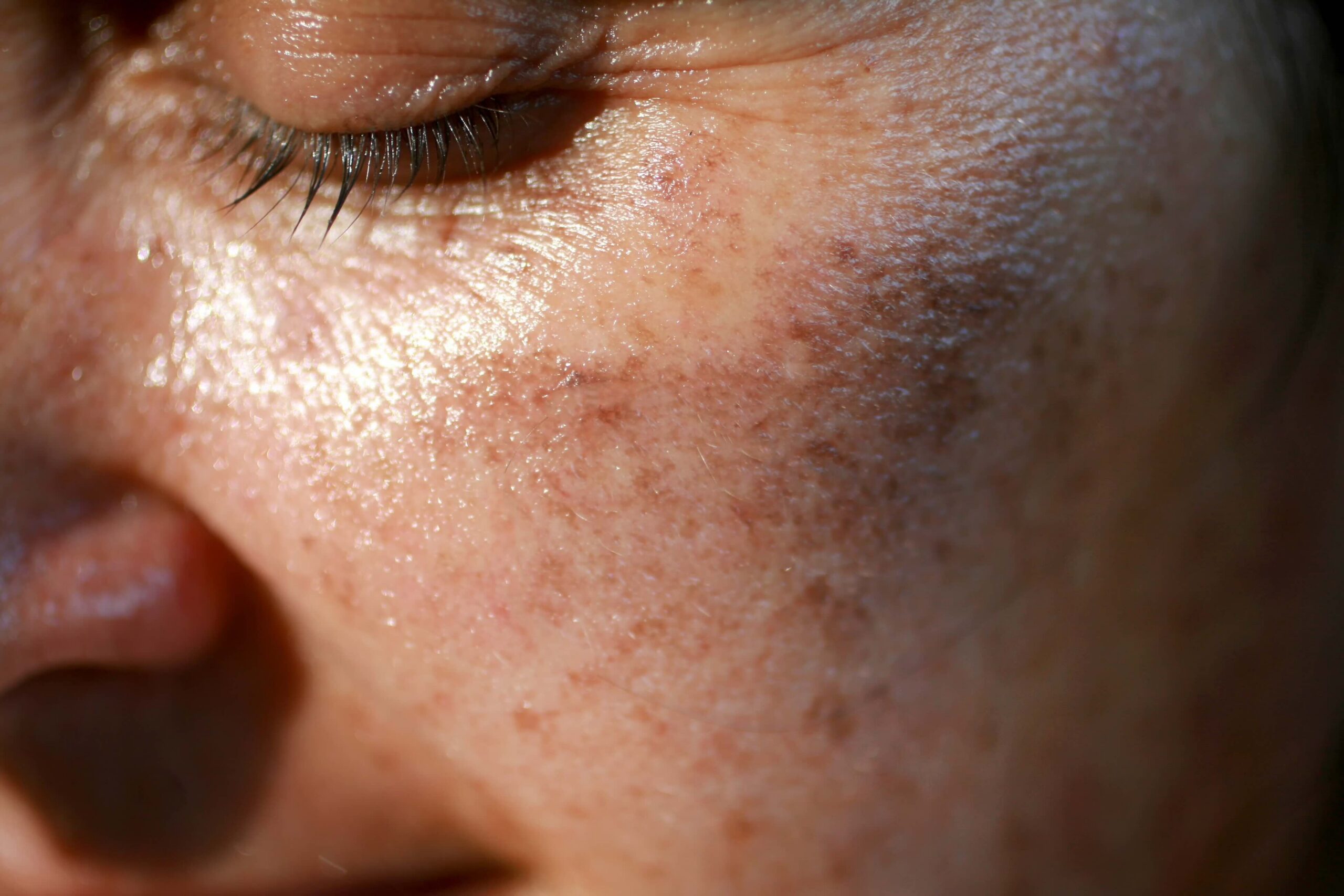
Have you noticed that summer is coming? pigment spots on the face – small dark spots on the cheekbones, nose or forehead?
At first they look like a mild tan – but later they don’t go away anymore. If you have started to notice that darker areas have appeared on your skin after being in the sun, then this is likely to be the case pigment spots.
These are not just a cosmetic problem – in reality, pigment spots indicate that a change has occurred in the skin. In this post, we will examine, How solar radiation actually causes pigmentationWhy is this happening in the summer and what is Scientifically proven ways to prevent and treat them.
If you want to understand what’s really happening to your skin – and how to support it – read on.
What’s a pigment patch?
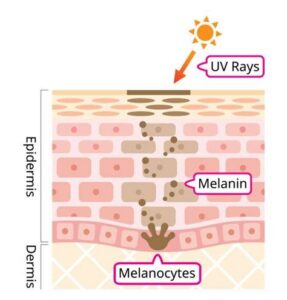
Pigmentation or hyperpigmentation occurs when melanocytes in the skin produce too much melanin – the skin’s natural protective pigment. When exposed to the sun, these cells send a signal: “Produce more melanin to protect the skin!” This melanin accumulates in certain areas, appearing as dark spots or patches on the face, décolletage, or hands.
How does the sun activate pigment (melanogenesis)?
1. Effects of UV radiation on skin
UV-B and UV-A radiation cause DNA damage in the skin. The detection of these damages in a cell triggers a protective mechanism – melanocytes start producing more melanin to neutralize the effects of radiation.
2. How does the skin produce melanin or pigment?
When the sun shines on the skin, it sends a signal to the body to produce more pigment – this is the body’s natural defense.
Pigment perhaps melanin occurs during the metabolism of an amino acid. A specific enzyme in the body activates the process that “matures” melanin. The pigment is then transported to the upper layers of the skin – and that is where it remains visible in the skin.
If too much pigment is produced or it is distributed unevenly, darker spots will appear.
3. Why do the exact spots occur?
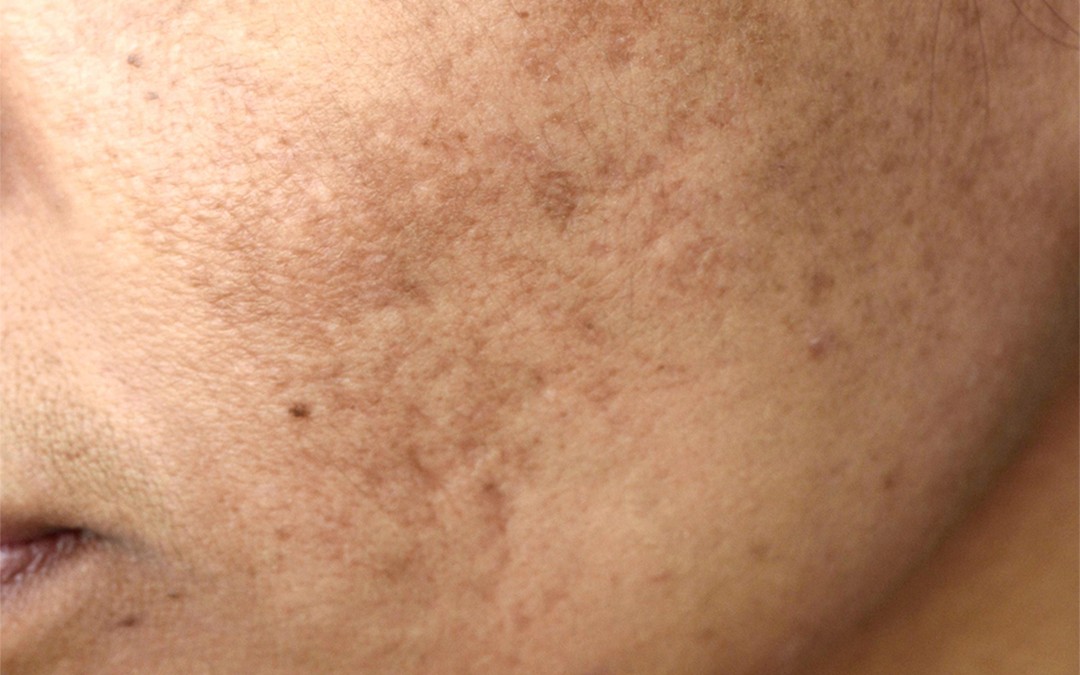
Melanin is not evenly distributed on the skin – it accumulates in some areas more intensively in pigmented regions or areas that receive more UV radiation. As a result, visible dark spots appear in the summer because the pigment accumulates faster than the skin can disperse or renew it. source
Who is more susceptible to pigment spots?
Repeated tan or UV radiation
Every time the skin is exposed to UV radiation, melanin production increases. Over time, the pigment accumulates in certain areas and may remain there even after tanning. This is why pigment spots often develop as a result of repeated sun damage over the years.
Hormonal changes (e.g., pregnancy, contraceptives)
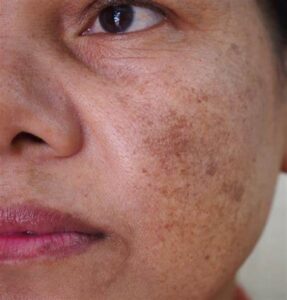
Hormone balance affects melanocyte sensitivity. The risk increases during pregnancy, menopause or when using hormonal contraceptives. melasma to appear – this is a symmetrical brownish pigmentation on the face, particularly on the cheeks, forehead, and lip area.
Inflammatory processes in the skin (post-inflammatory hyperpigmentation)
After acne, eczema or even mechanical irritation of the skin (e.g., scratching or excessive chemical peeling), pigment can accumulate in the damaged area. This is particularly common in people whose skin naturally produces a lot of melanin.
People with darker skin tone
People who naturally have more melanin are more prone to developing stronger and longer-lasting hyperpigmentation. However, their skin also has stronger natural protection against UV radiation – but if damage does occur, the spots are often more noticeable and take longer to fade.
Prevention and protection: the best start
Daily SPF ≥ 30
Use a broad-spectrum sunscreen that protects against both UV-A and UV-B radiation – especially in summer and spring.
Important: Sunscreen should be used every day, regardless of the weather – even on cloudy days and indoors when you are near a window.
Physical protective equipment
A wide-brimmed hat, sunglasses, and UV-protective clothing (UPF 50+) provide an important barrier to direct radiation. If possible, wear lightweight but long clothing when exposed to the sun for a long time to significantly increase skin protection.
Antioxidants and pigment suppressants
Vitamin C, vitamin E, arbutin, niacinamide and other antioxidants help neutralize UV stress and inhibit the overproduction of melanin. However, it is not necessary to take these as supplements daily. If possible, combine these substances in your diet.
What can we do in the clinic to reduce pigment spots?
Aesthetic medicine offers several effective and evidence-based procedures that help reduce existing pigment spots and even out the skin tone. At the NOOR aesthetic clinic, we always start from the condition of the skin, the goals, and sensitivity – and we create a personalized plan that suits you.
Effective procedures for hyperpigmentation:
-
Chemical peelings: We use AHA and BHA acids or retinoid peels to help remove surface pigmentation, accelerate cell turnover, and reveal fresher, more even skin. With good sun protection, these treatments can be performed year-round.
-
Intense Pulsed Light (IPL): Certainly our clinic’s most popular procedure for removing pigment spots. Light energy breaks down the pigment, which the body naturally removes. It’s important to note that this procedure is not performed on tanned skin as it can cause more harm than benefit, so we primarily perform it during the autumn-winter period.
-
iPRF (“own blood injections”): Although iPRF does not directly reduce pigmentation, it helps strengthen the skin barrier and reduce the inflammatory background that often exacerbates pigment changes. It is ideal to use in combination with other treatments. The good news is that this procedure can be performed at any time of the year and is very effective not only for alleviating pigmentation but also for addressing many other concerns. Read more about iPRF
-
Professional home serums and retinoids: During the consultation, we provide recommendations for pigment-reducing products that can be used consistently at home.
Final word
If you’ve noticed that it’s coming out in the summer. pigment spots on the face or also on the body, then know – these are not permanent. With the right care, protection and professional support, you can achieve a uniform and calm complexion again.
✅ Start with a specialist consultation – find out what type of pigmentation you have and which treatment is suitable for you.
– Make SPF your daily habit.
✅ Consider home care and if necessary, add effective aesthetic procedures.
The treatment for pigment spots is not a sprint – it is a marathon. But consistent care and awareness clearly lead to a more uniform, calm and radiant skin.
 Kadaka tee 42b, 12919 Tallinn II korrus
 E-R 09.00 — 17.00
 info@n8r.ee
 +372 59009272