

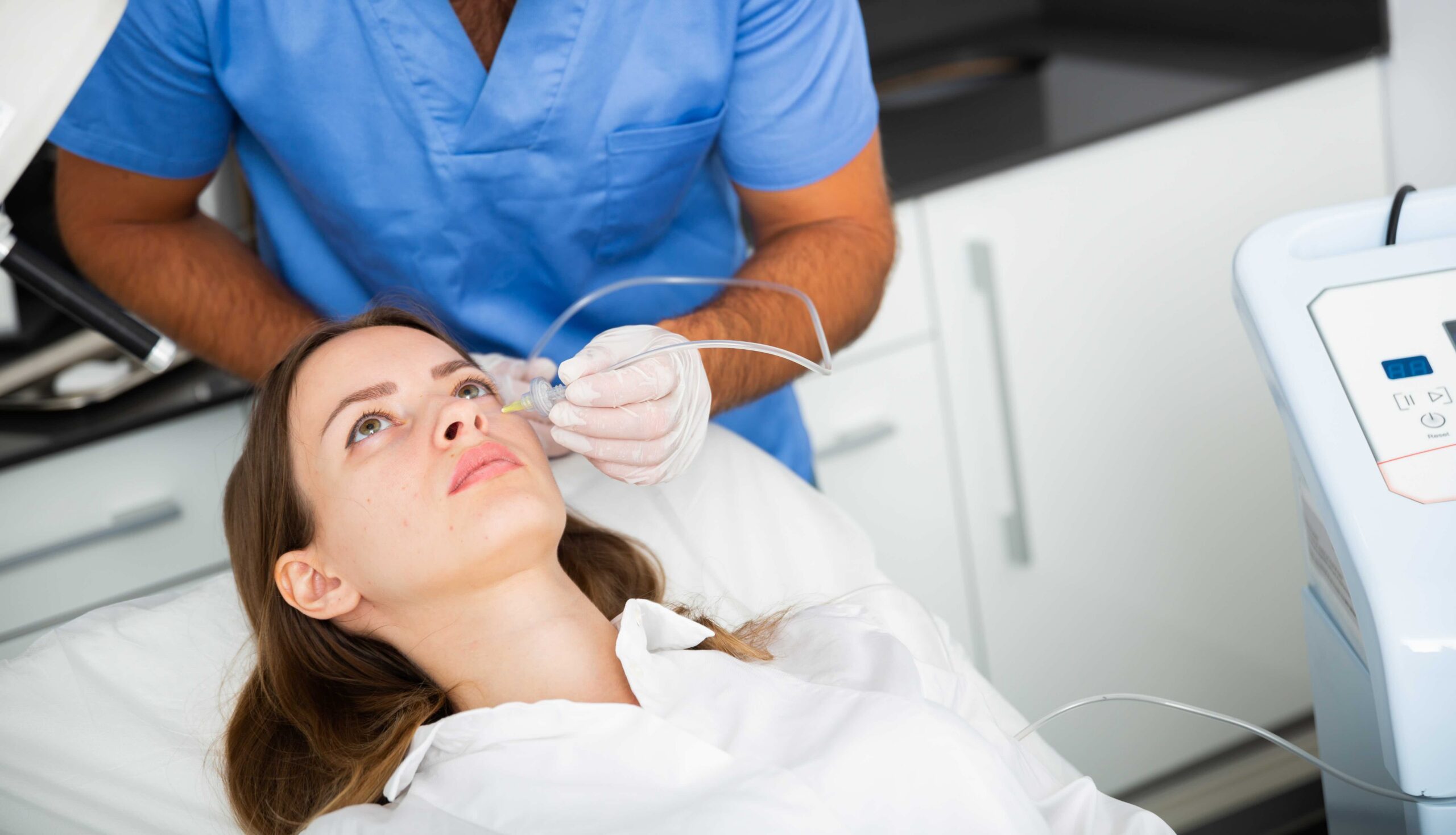
Carboxytherapy deserves a place in a treatment plan for the eye area. It can be combined successfully with other treatments, used before or after surgery, or selected as a treatment in its own right.
People are increasingly well informed about aesthetic treatments. A single treatment is often not enough, and different methods are combined to achieve the desired result. This is especially important around the eyes, where the skin is thin and sensitive. The chosen methods should complement one another and help the skin function better. If you are looking for a gentle and effective way to refresh the eye area, carboxytherapy may be a suitable choice.
Read on to learn why it can be a considered step in a treatment plan, not merely an optional extra.
What is carboxytherapy and how does it work around the eyes?
Carboxytherapy is a treatment in which medical-grade carbon dioxide (CO₂) is introduced beneath the skin. The body is familiar with this gas, and the method has also been used in clinical medicine for decades, including to support wound healing and treat circulatory disorders.
Around the eyes, where the skin is thin and circulation can be slow, carboxytherapy helps activate circulation and support metabolic processes in the skin. The result is better oxygenated, more vital skin that functions more effectively.
Because the treatment supports the skin’s natural function and recovery, it can complement different aesthetic treatments before or after surgery and as part of a long-term treatment plan.
Why does the eye area need special attention?
The skin around the eyes is thin and sensitive, so puffiness, dark shadows and fine lines appear there more quickly. These characteristics limit the range of suitable treatments and call for a careful, gentle approach.
Clinical research suggests that carboxytherapy can be an effective and safe option for the eye area. A 2024 study of dark circles reported a noticeable improvement in skin tone and patient satisfaction without serious adverse effects. Reference. Research has also shown improvements in skin elasticity and microcirculation, making carboxytherapy a useful complement to other aesthetic treatments, particularly around the eyes. Reference.
When and for whom is carboxytherapy around the eyes suitable?
| Concern or goal | Recommended frequency | Timing |
|---|---|---|
| Under-eye puffiness | 4–6 sessions, once a week | As a course or before events |
| Dark circles | 6–8 sessions, once a week | As a course, with maintenance sessions if needed |
| A fresher, rested appearance | 1–3 sessions | As a short course or combined with other treatments |
| Fine lines around the eyes | 6–10 sessions, once a week | As a course combined with other treatments |
| Before eyelid surgery | 2–4 sessions | During the month before surgery |
| After eyelid surgery, to support recovery | 3–6 sessions, individually planned | From about three weeks after surgery, on a doctor’s recommendation |
| Combination with other treatments | According to the treatment plan | Before, after or between sessions as supportive care |
When is the best time to begin a course of carboxytherapy?
The ideal time depends on your goal. If you want a fresher appearance before a major event such as a wedding or photo session, begin four to six weeks beforehand for the best effect.
When the course is intended to support recovery after surgery, sessions are planned individually on the recommendation of the surgeon or our specialist. Carboxytherapy is generally suitable throughout the year. As it does not cause UV sensitivity, it can also be used in spring and summer.
When is carboxytherapy unsuitable?
Carboxytherapy is widely used, but there are situations in which it is not recommended. It is not performed during pregnancy or breastfeeding, or in the presence of active skin inflammation, an infection at the injection site or chronic circulatory disorders.
A thorough consultation before treatment is necessary to assess health and exclude contraindications. We also evaluate whether carboxytherapy is the best option for the desired result or whether another method or combined approach should be considered. Book a consultation
What happens during carboxytherapy around the eyes?
Carboxytherapy for the eye area is a short, generally well-tolerated treatment. It takes about 15–20 minutes and does not require downtime.
Carboxytherapy step by step:
-
Cleansing – the eye area is carefully cleansed of make-up and oil.
-
Carbon-dioxide injection – a precisely measured amount of CO₂ is injected beneath the skin with a very fine needle.
-
Brief reaction – the patient feels slight pressure or warmth in the treated area.
-
Temporary swelling – moderate swelling around the eyes is a normal part of treatment and usually subsides within a day.
-
Return to daily life – no cooling or special care is needed, and normal activities, including exercise, can be resumed immediately after the session.
Combining carboxytherapy around the eyes with other aesthetic treatments
We recommend combining carboxytherapy with the following treatments:
-
Polynucleotide injections to support recovery and cellular activity – read about polynucleotides
-
Mesotherapy and hydrating injections to improve skin quality
-
Laser and device-based treatments to improve tone and texture
-
Before and after eyelid surgery to prepare the skin and support healing
Carboxytherapy improves blood supply and oxygen uptake in the tissues, creating an environment in which other treatments can work more deeply and effectively.
Carboxytherapy + polynucleotides
Carboxytherapy improves circulation and oxygen supply, helping the skin receive more nutrients and function better. When followed by a polynucleotide injection, these active substances can work more effectively. Polynucleotides may be distributed more efficiently and act more deeply after carboxytherapy, supporting elasticity, smoothing superficial lines and accelerating recovery.
Carboxytherapy + mesotherapy
Mesotherapy and hydrating injections supply the skin with vitamins, minerals and hyaluronic acid. Carboxytherapy performed before or after them improves blood flow and may help the injected active ingredients distribute more effectively, increasing the overall effect. The result is brighter, more hydrated skin, especially in areas with slow microcirculation such as the eye area or lax cheek skin.
Carboxytherapy + laser and device-based treatments
Laser and other device-based treatments aim to even texture and tone, stimulate collagen or correct superficial changes. Carboxytherapy can support recovery afterwards and improve the skin’s condition beforehand, helping the main treatment work more effectively. It is a way to prepare the skin for the best possible result.
Carboxytherapy + eyelid surgery
Carboxytherapy can create favourable conditions for postoperative healing. After surgery, CO₂ supports restoration of microcirculation, reduces swelling and promotes tissue renewal. The method has long been used in medicine to support recovery and is now also used in aesthetics to strengthen natural repair and encourage an even result.
‘I did not want anything invasive, but the dark circles bothered me. Carboxytherapy made my eyes look so much fresher – with no time away from work and a completely natural result.’ – client feedback
Do your eyes need refreshing, either alone or as part of a broader treatment journey?
Carboxytherapy works well as a treatment for the eye area in its own right and in combination with other aesthetic procedures, including before eyelid surgery or to support recovery afterwards.
Contact us and book a consultation. Together, we will find a treatment plan suited to your needs. Contact us here
 Kadaka tee 42b, 12919 Tallinn II korrus
 E-R 09.00 — 17.00
 info@n8r.ee
 +372 59009272