

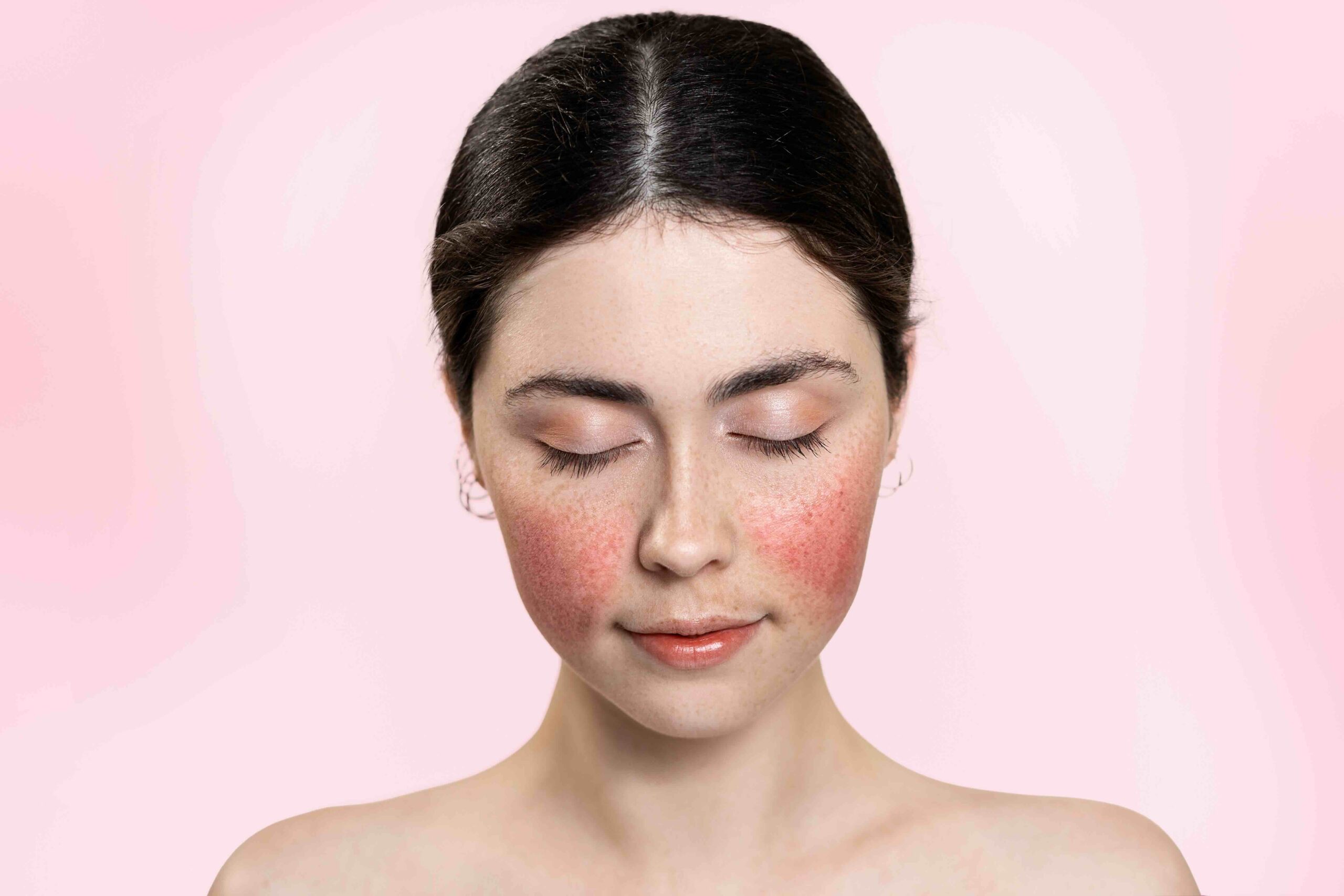
Rosacea is a chronic inflammatory skin condition characterized by persistent redness, visible capillaries, and sometimes small inflammatory pustules.
Rosacea most commonly affects the central face – cheeks, nose, chin, and forehead – and can significantly impact both appearance and self-esteem.
Unlike the usual redness, rosacea More durable and often requires conscious care and professional treatment.
What is rosacea and why does it occur?
Scientists have not found a single definitive cause for the development of rosacea, but research indicates that it is a multifactorial disease. The following play a role:
1. Overreactivity of blood vessels
In rosacea, the small blood vessels in the skin are as it were “overly sensitive.” They react excessively to heat, cold, sunlight or certain foods and beverages. While normal skin cools down quickly, in rosacea the blood vessels remain dilated longer. This results in persistent redness or “flushing” that does not disappear within a few minutes.
2. Changes in the immune system
Rosacea skin often behaves as if it is in a constant state of ‘readiness’ – the immune system is activated even when there is no direct threat. This triggers inflammation, which can manifest as redness, a feeling of warmth, and sometimes small pimple-like or pustular inflammatory lesions.
3. Genetic predisposition
If your parents or grandparents have had rosacea, unfortunately, their descendants are also more likely to experience it. The disease is particularly common among people with fair skin, blue eyes and Northern European ancestry. Fortunately, this does not mean that rosacea will definitely occur, but it does make the skin more sensitive to external and internal influences.
4. Environmental factors and lifestyle
Rosacea does not appear out of nowhere – it is often triggered by external factors. For example, the sun and UV radiation can damage blood vessels, sudden temperature changes (from cold to hot) can irritate them, certain foods and beverages (spicy food, alcohol, hot coffee) cause rapid dilation of blood vessels. Stress, lack of sleep and unhealthy diet can also increase skin sensitivity and trigger exacerbations.
Rosaatsea causes and treatments are thoroughly discussed in the 2020 publication Journal of the American Academy of Dermatology (Standard management options for rosacea: The 2019 updateThis explains the multifactorial nature of rosacea. Publication reference
Types of Rosacea
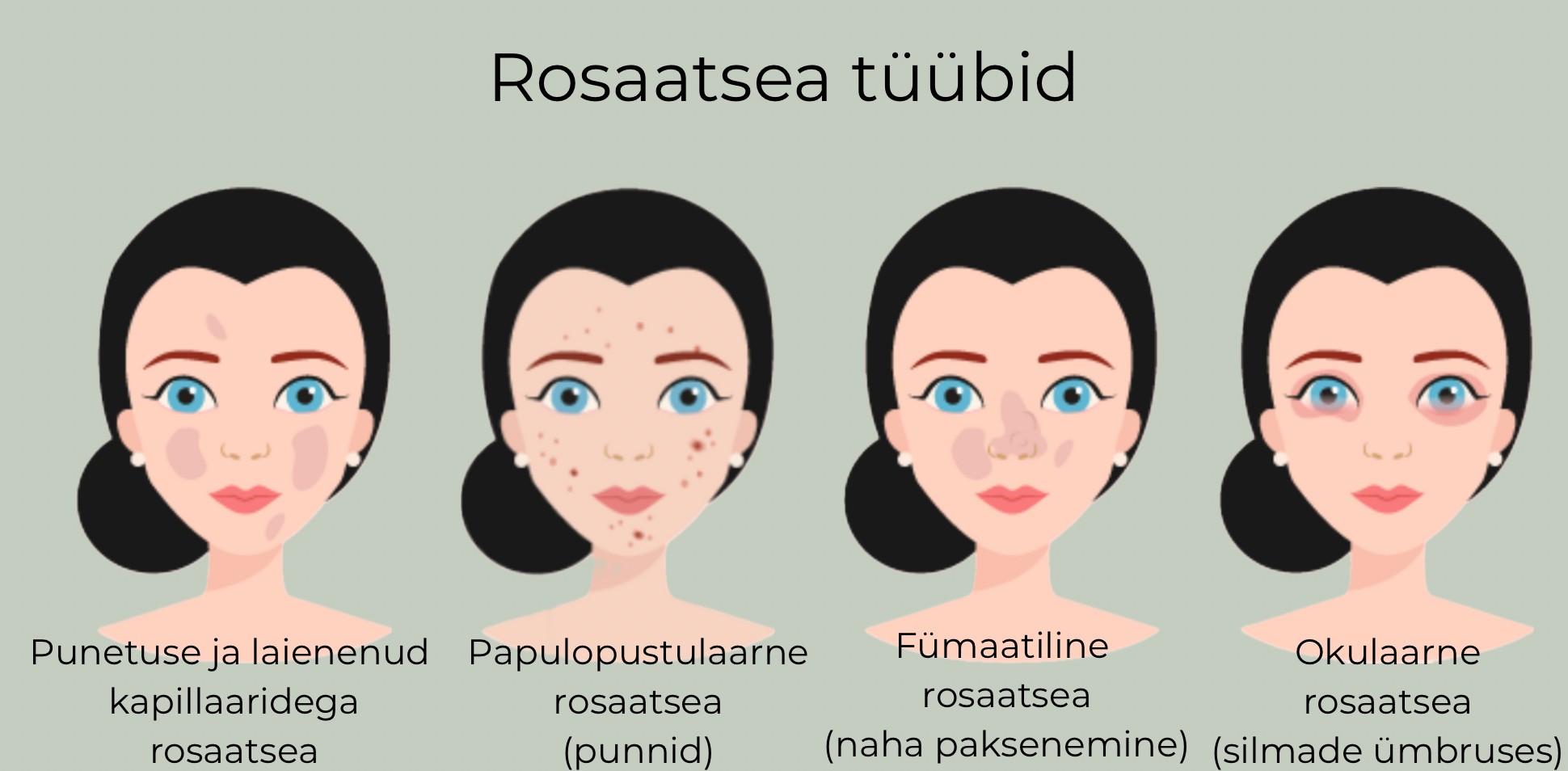
Rosaatsea is divided into several subtypes that may occur separately or together. Each type manifests with slightly different symptoms and may affect both women and men, but the frequency and severity may vary. Recognizing the types helps choose the right treatment and care.
| Type of rosacea | Main symptoms and signs | Frequency and risk groups |
|---|---|---|
| Erythematotelangiectic rosacea (ETR) | Persistent redness, visible capillaries (telangiectasias), frequent flushing episodes. The first signs are often temporary flushing that becomes persistent over time. | The most common form of rosacea. It occurs more frequently in women, especially those with fair skin of Northern European descent. |
| Papulopustular rosacea (PPR) | Redness with inflammatory papules and pustules, resembling acne, but comedones are absent. May be accompanied by skin swelling and tenderness. | Common in moderate to severe rosacea. Affects both women and men, but diagnosed more frequently in women. |
| Phymatic rosacea | Skin thickening and connective tissue proliferation, often on the nose (rhinophyma), which results in the nose becoming enlarged and uneven. It typically begins with persistent redness and skin roughness. | A rarer form, occurring mainly in men, often as a result of untreated rosacea over many years. |
| Ocular rosacea | Redness, dryness, stinging or burning sensation, light sensitivity around the eyes. Small inflammatory papules may occasionally develop on the eyelids. | Can coexist with other forms of rosacea. Affects both men and women equally and is often diagnosed later than skin symptoms. |
Causes of rosacea and how to reduce their impact
1. Sun and UV radiation
-
Why does it work: UV radiation expands blood vessels and damages the skin’s protective barrier. In short, the sun is one of the biggest root causes of rosacea!
-
What to do:
-
Use sunscreen every day (SPF 30 or more, preferably labeled non-comedogenic and free of fragrances.
-
Instead of tanning, prefer to stay in the shade and wear a wide-brimmed hat.
-
Fresh 2021 survey ()Journal of the American Academy of DermatologyIt confirms that regular use of SPF significantly reduces the exacerbation of rosacea. Survey reference
-
2. Temperature changes
-
Why does it work: Rapid transition from cold to hot (or vice versa) causes sudden dilation of blood vessels.
-
What to do:
-
Avoid excessively hot showers or saunas.
-
In cold weather, cover your face with a scarf or buff; in hot weather, use breathable fabrics and air movement.
-
3. Spicy food and alcohol
-
Why does it work: Need stimulate vasodilatation and can trigger a flushing episode within minutes.
-
What to do:
-
If you notice a connection to certain foods, reduce the frequency or amount you consume them.
-
Opt for cold, alcohol-free alternatives to alcoholic beverages.
-
If you enjoy spicy foods, it’s a good idea to eat them alongside cooling foods (e.g., yogurt-based sauces).
-
4. Stress and sleep (as always, we can’t overlook this problem).
-
Why does it work: Stress hormones (cortisol) and sleep deprivation can weaken the immune system, making the skin more reactive.
-
What to do:
-
Create a definite sleeperutin (7–8 hours of sleep).
-
If possible, incorporate relaxation techniques – such as breathing exercises, meditation, or simply a quiet walk.
-
5. Skin care products and cosmetics
-
Why does it work: Fragrances, alcohol, and certain preservatives can irritate sensitive skin.
-
What to do:
-
Choose products with labels sensitive skin or rosacea-friendly (for rosacea).
-
Avoid hard peeling particles and too strong acids.
-
When trying a new product, first take a skin test in a small area.
-
Myths about rosacea:
“Rosacea disappears by itself.” – In fact, rosacea is a chronic condition that requires consistent care and avoidance of triggers. Without intervention, symptoms tend to worsen over time.
“Runetus always means rosacea.” – Persistent facial redness may be a sign of rosacea, but it can also be caused by other skin conditions or temporary irritants. Only a specialist can make the correct diagnosis.
“Strong peeling helps.” – Excessive or harsh exfoliation irritates sensitive skin and worsens inflammation. For rosacea, only gentle treatments are suitable.
Daily care is one of the most important foundations for keeping rosacea under control. The right routine helps reduce irritation, strengthen the skin’s protective barrier and prolong the results of procedures. Here is a simple guide:
| Maintenance phase | Why is this important? | Tricks and recommendations |
|---|---|---|
| ?Gentle cleaning | Removes dirt and excess sebum without over-drying or irritating the skin. | Use fragrance-free and soap-free cleansers. Water should be lukewarm, not hot. |
| ?Irrigation | Strengthens the skin’s protective barrier and reduces dryness that causes redness. | Choose a lightweight, hypoallergenic cream with soothing ingredients (e.g., niacinamide, panthenol). |
| ☀️Sunscreen | Protects against UV radiation, which is a major trigger for rosacea. | Use SPF 30+ broad-spectrum sunscreen every day, even on cloudy days. |
| ?Avoiding irritants | Reduces the risk of inflammation and redness. | Avoid alcohol, strong fragrances, abrasive exfoliants, and very hot water. |
How can we help you with rosacea?
- First, we will determine whether it is rosacea or another skin condition. For this, consult our specialist or book an appointment with our dermatologists via our online booking system. Book a consultation
-
IPL – highly effective and the number one procedure for reducing mild rosacea – visibly reduces redness and capillaries (cannot be performed during severe rosacea).
-
Medical soothing facial treatments Reduce redness and strengthen the skin barrier. Ask me more
-
Personal maintenance plan – it is very important to discuss home care. If necessary, we will select products and a skincare routine that suit your skin’s current condition.
Summary
Rosacea Rosacea is a chronic skin condition characterized by redness and visible capillaries. Learn how to prevent and effectively manage it.
 Kadaka tee 42b, 12919 Tallinn II korrus
 E-R 09.00 — 17.00
 info@n8r.ee
 +372 59009272