

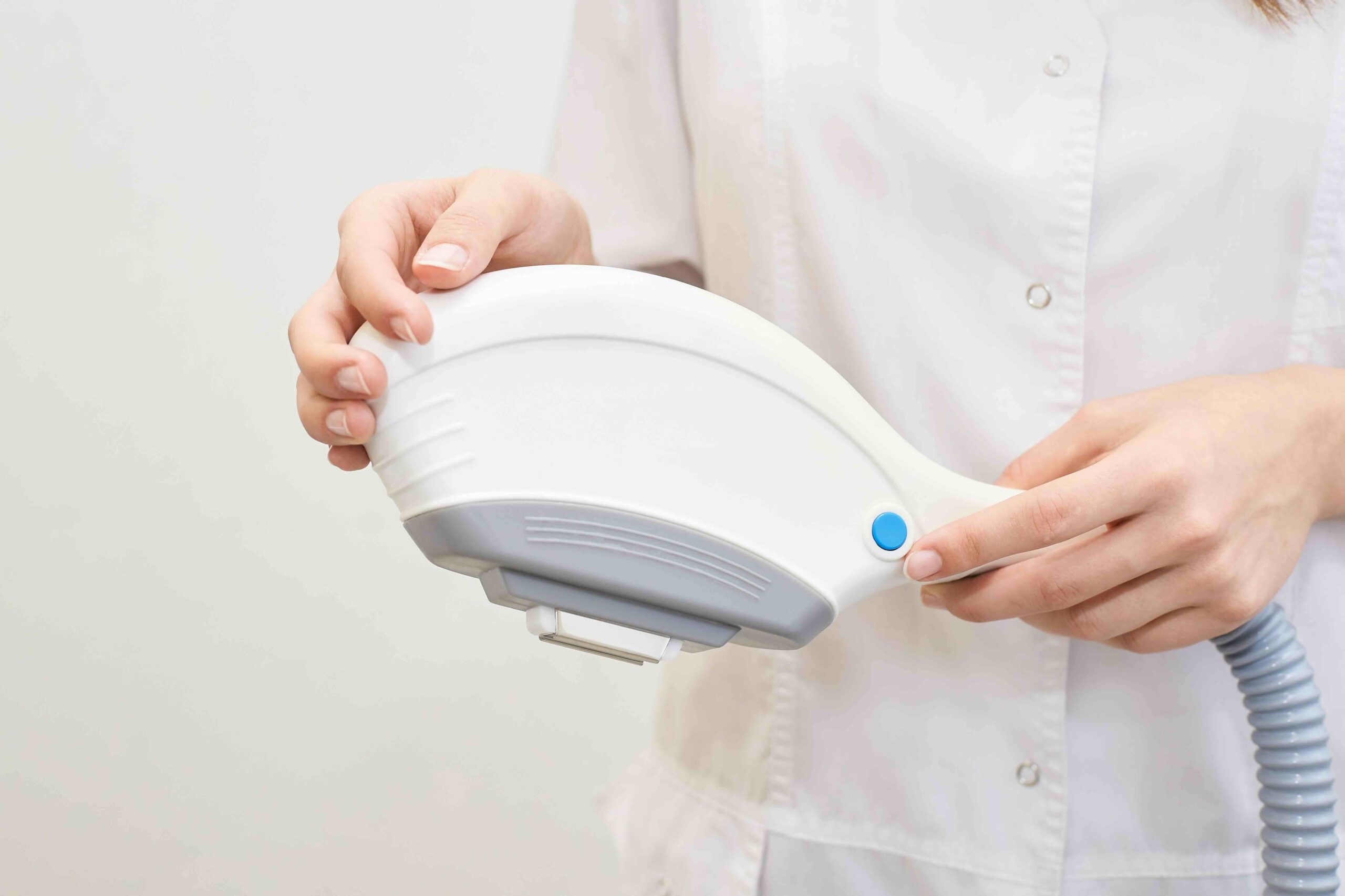
Many patients ask: ‘What is the difference between a photopeel and photorejuvenation? Are they the same thing?’
Although both treatments use IPL technology, their aims and effects differ slightly. First, it helps to understand IPL, or intense pulsed light.
What is IPL?
IPL uses rapid, intense pulses of light to affect the skin. It is not the same as a laser: a laser uses one specific wavelength, while IPL uses a broader spectrum of light.
IPL can therefore address several concerns:
-
pigmentation;
-
redness and visible capillaries;
-
overall skin texture and complexion.
Light is absorbed where there is more colour in the skin, such as haemoglobin in blood vessels or melanin in pigmentation. The resulting heat initiates repair processes, including collagen production.
This technology is used in treatments such as photopeel and photorejuvenation. They use the same technology for different purposes.
IPL also encourages the growth of collagen and elastin fibres.
A study titled ‘Quantitative evaluation of collagen and elastic fibers after intense pulsed light treatment of mouse skin’ found that the density of both collagen and elastin fibres in the dermis increased after several IPL treatments. Research reference
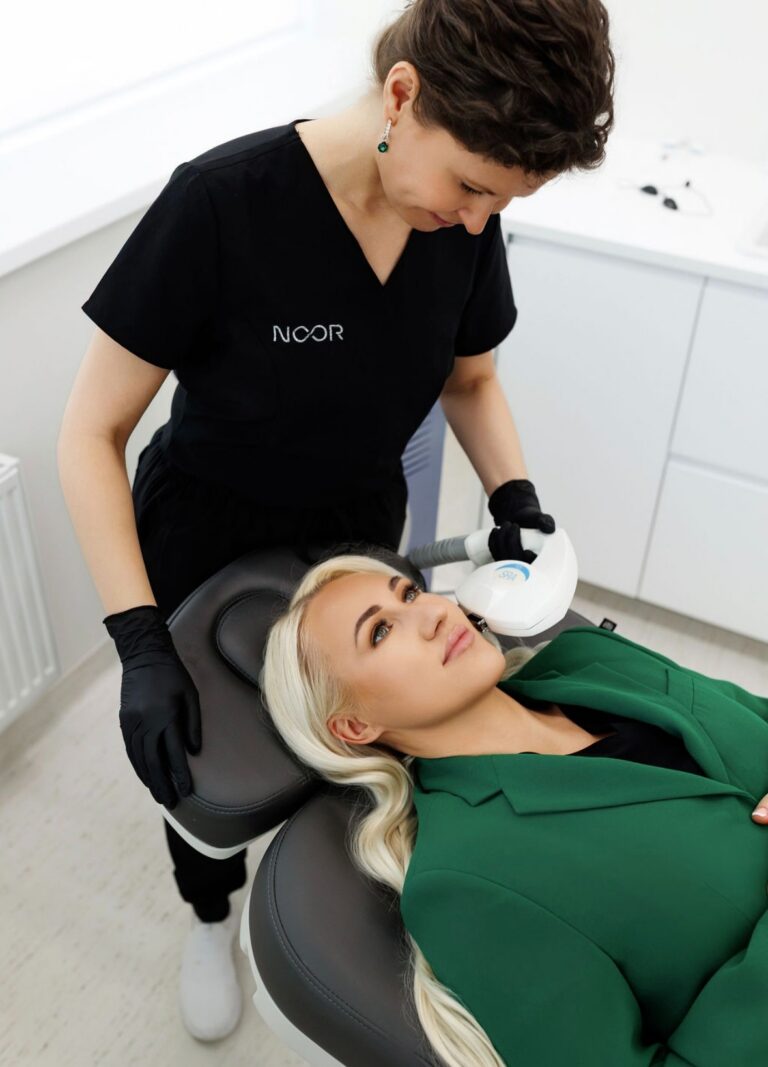
What is IPL photorejuvenation and how does it differ from a photopeel?
Photorejuvenation uses intense pulsed light to improve tone and texture, reduce pigmentation, sun damage, visible capillaries and redness and support collagen production.
What does it target?
-
Pigmentation and photoageing: sun spots and uneven tone.
-
Vascular changes: superficial blood vessels, redness and rosacea-related concerns.
-
Overall tone and radiance: freshness and visible photo-damage.
What happens and how many treatments are needed?
A session generally lasts about 20–30 minutes. Many people need one to three sessions at four-week intervals. Results develop gradually, and a maintenance session may later be repeated once or twice a year. Common short-term reactions are redness and swelling.
For more significant concerns such as acne, pronounced redness or pigmentation, the number of sessions is individual and often ranges from two to five.
What is a photopeel and how does it differ from photorejuvenation?
Photopeel is a combined treatment: IPL photorejuvenation plus a chemical peel using acids or retinol during the same visit. IPL targets vessels and pigment and stimulates collagen, while the peel removes superficial dead cells, smooths texture and makes the visible result more pronounced.
What can you expect?
-
Goal: a clearer, glowing complexion, less superficial pigmentation and visible pores, and a more even tone.
-
Texture: the peel provides superficial smoothing, while IPL supports the reduction of pigmentation and visible capillaries.
-
Why choose it? When the goal is both tone correction and superficial textural renewal, a photopeel often produces a visible effect sooner.
Note: ‘Photopeel’ is a service or commercial name, not an international medical term. Details can vary by clinic, but the common denominator is IPL plus a chemical peel.
| IPL photorejuvenation | Photopeel |
|---|---|
| IPL treatment that improves tone and reduces redness and pigmentation. Filters direct selected wavelengths towards melanin and haemoglobin. | Combined treatment: IPL plus a chemical peel with acids or retinol. It affects both tone and superficial texture. |
| Evens tone and reduces pigmentation and visible capillaries. Can also suit certain skin conditions such as rosacea outside an acute flare. | Tone plus texture: reduces visible pores and unevenness and adds a clear glow. Can also suit non-acute rosacea and other photo-damage. |
| When redness, visible capillaries or pigmentation are the main concern. | When you want to address both tone and superficial texture. |
| A more even complexion and less redness develop gradually through a course. | Often a faster visible effect: more even tone and smoother texture through the added peel. |
| A strong option for tone concerns including redness, capillaries and pigment. | An effective combination of IPL light with the superficial smoothing effect of a chemical peel. |
Home care is as important as professional treatment
Although photorejuvenation and photopeel can produce visible results, daily home care remains essential. Appropriately selected products help reduce irritation, prolong the effect and prevent new concerns. Daily SPF is indispensable because pigmentation and visible capillaries can quickly return without sun protection.
Every person and their skin are different, so we create a home-care plan suited to your skin type and condition during the consultation. When needed, we recommend cleansing, hydrating and restorative products that are widely available from pharmacies and support the effect of IPL while helping keep the skin healthy over time.
Summary
Photopeel and photorejuvenation both use IPL, but their emphasis differs.
-
Photorejuvenation is a strong choice for reducing redness, visible capillaries and pigmentation and improving the overall complexion.
-
Photopeel adds a chemical peel to IPL, providing superficial textural renewal and a faster glow alongside tone correction.
Both treatments support the skin’s own repair capacity and can help improve collagen production over time.
 Kadaka tee 42b, 12919 Tallinn II korrus
 E-R 09.00 — 17.00
 info@n8r.ee
 +372 59009272