

IPL
By: Laura Lorents
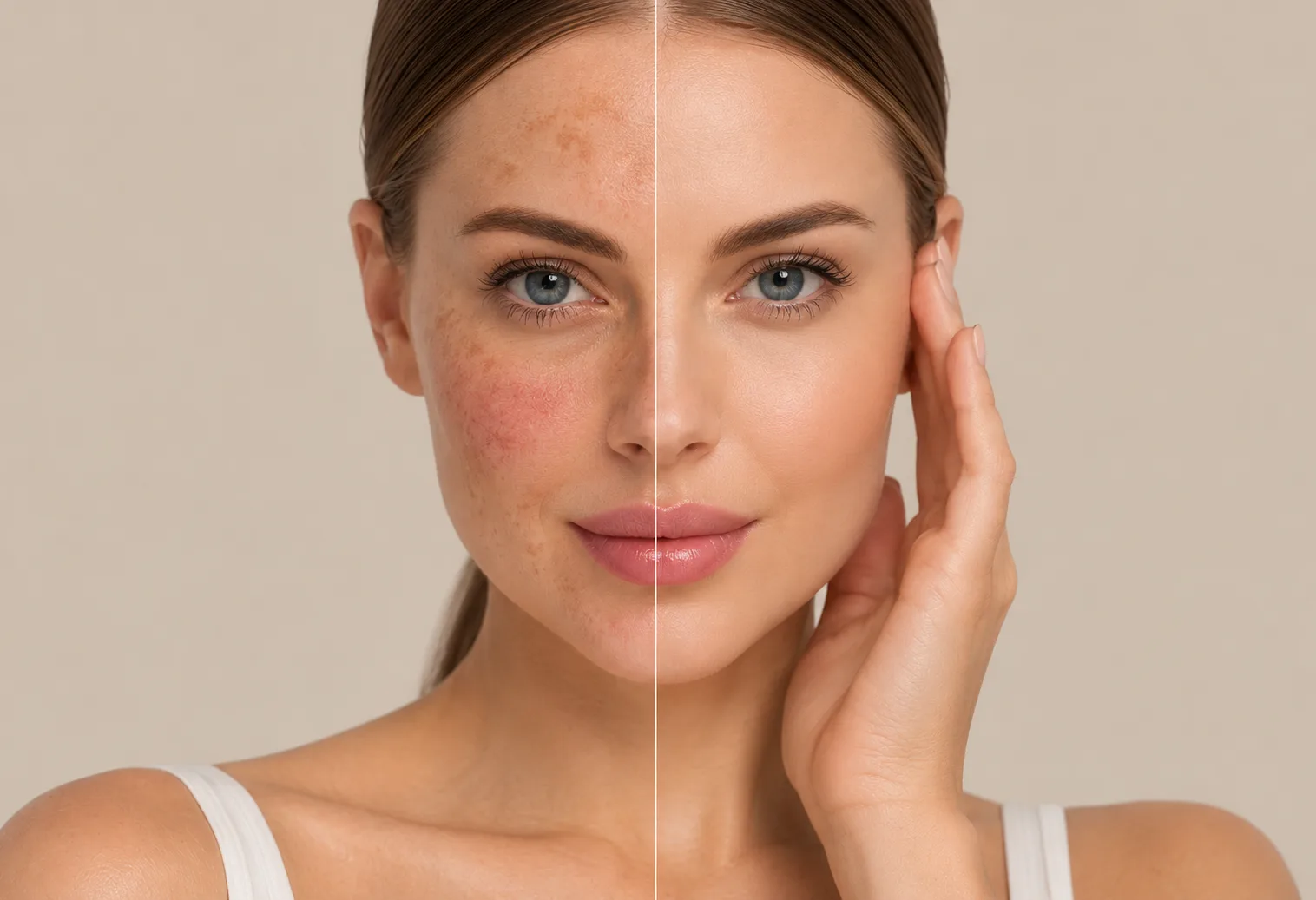
IPL, or intense pulsed light, is a non-invasive light-based treatment used in medicine and aesthetic medicine. It delivers controlled pulses of light to the skin. IPL is used for various pigmentation and vascular concerns, sun damage and, in some cases, acne and unwanted hair.
Although IPL is often compared with laser treatment, they are different technologies. Both use light energy, but IPL uses a broad spectrum of light, whereas a laser operates at a specific wavelength.
In this article, I explain what IPL treatment is, how it works, when to start and what results to expect.
What exactly is IPL?
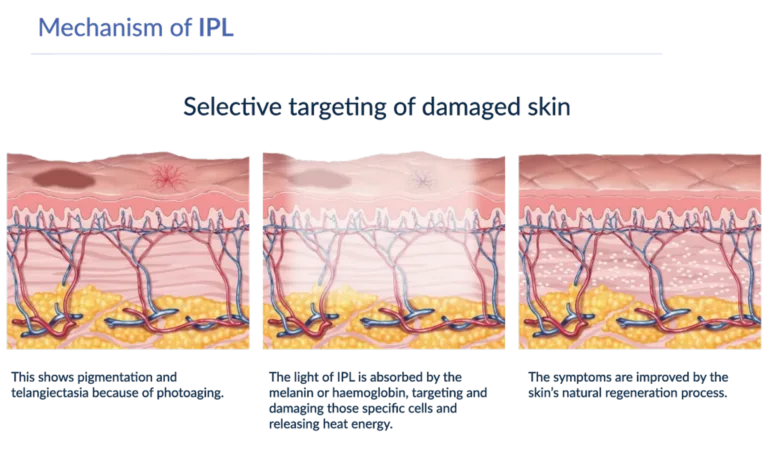
Intense pulsed light uses strong, brief pulses of light. Its action relies on a simple principle: light energy is absorbed differently in the skin, depending on the treatment target. For example, light is absorbed by melanin, the skin’s pigment, and by blood within blood vessels. The energy turns into heat, allowing selected pigmentation or superficial blood vessels to be targeted while minimising damage to the surrounding skin.
IPL can therefore help reduce pigmented spots, visible superficial vessels, redness and uneven skin tone. The choice of filter and treatment settings depends on the concern being treated and the condition of the skin.
In medicine, IPL is used primarily for skin changes involving blood vessels and pigmentation. Common uses include:
- superficial and dilated small blood vessels
- rosacea and couperose
- pigmented spots
- acne in selected cases.
In aesthetic medicine, IPL is most often used to reduce signs of sun damage and photoageing. The aim is to even out skin tone and improve concerns such as:
- sun-induced pigmented spots
- uneven skin tone
- facial redness
- enlarged pores
- fine lines and changes in skin texture.
This approach is often called photorejuvenation.
What happens during IPL treatment?
Before treatment, you have a consultation with an aesthetic medicine specialist. They assess your skin and the concern you would like to address. You also discuss your expectations, previous procedures, medications, possible contraindications and side effects.
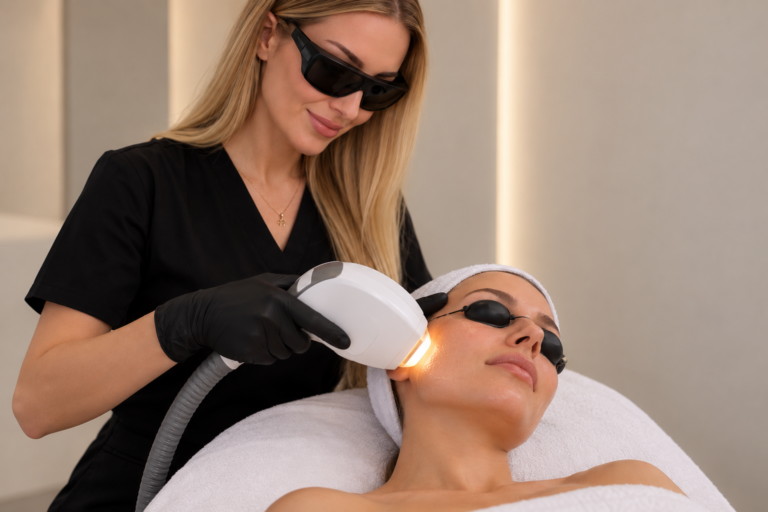
Immediately before the procedure, the skin is cleansed and a special gel is applied to help transmit the light and protect against excessive heating. Suitable protective eyewear is worn. The IPL handpiece is placed against the skin and delivers a series of brief light pulses.
IPL is not usually described as severely painful, but the pulses can be felt. Patients often compare the sensation to a brief burst of heat, a sting or a light rubber-band snap against the skin.
IPL is non-invasive, so recovery is usually short and most people can resume their normal activities the same day. Immediately afterwards, the skin may feel warm, look red or be slightly swollen for several hours. Swelling can last longer in sensitive areas, such as around the eyes. When treating pigmented spots, they may initially darken over the following days before gradually lightening and fading as the skin renews itself.
During recovery, treat the skin gently, avoid excessive heat and friction, and protect it from the sun. Daily broad-spectrum sunscreen is essential. Recovery varies between individuals. Your specialist will provide specific aftercare instructions based on the device, treatment area and procedure.
After treatment, avoid the following for the period advised by your specialist:
- direct sun exposure and tanning
- sunbeds
- saunas, steam rooms and spas
- intense exercise
- invasive facial procedures
- hair removal in the treated area
- alcohol.
When can you start IPL treatment?
There is no single age at which everyone should start IPL. The need for treatment is determined primarily by the particular skin concern. It may be suitable for a younger person with a specific concern or for an older person seeking to reduce signs of photoageing. Before treatment, an aesthetic medicine specialist assesses the skin and treatment goals and decides whether IPL is appropriate.
IPL can be performed at different times of year, but autumn, winter and early spring are generally the most suitable seasons because UV exposure is usually lower. After treatment, the skin is temporarily more sensitive, and strong UV exposure can increase the risk of unwanted pigmentation changes.
Results
IPL results are not immediate. How soon they become visible depends on what was treated.
Pigmented spots: treated spots may initially darken. Pigment may flake off in tiny particles resembling coffee grounds, after which the area gradually becomes lighter. A change may be noticeable after one session, but several treatments are often needed.
Redness, superficial blood vessels and rosacea: redness and visible vessels may begin to improve over the following days and weeks. Redness often requires a longer course of treatment.
Sun damage and uneven skin tone: the complexion gradually becomes more even, with results usually developing over several weeks.
Signs of photoageing: improvement in the skin’s overall appearance can be slower and develops gradually during the course of treatment and after it ends.
Although a result may already be visible after one session, IPL is often delivered as a course of several treatments. Not all targets respond to a single session in the same way, and changes in the skin happen gradually.
Results are not necessarily permanent. Further UV damage and sun exposure can contribute to new pigmented spots and vascular changes. Consistent sun protection and appropriate skincare remain important after IPL.
Summary
IPL, or intense pulsed light, is a non-invasive procedure that can reduce pigmented spots, superficial blood vessels, redness and sun-related skin changes. It is also used to improve the overall appearance of skin that looks uneven, dull or sun-damaged.
One of IPL’s main advantages is its versatility. The same technology can address different concerns. At our clinic, treatment therefore begins with a consultation, during which a specialist assesses your skin condition, skin tone and treatment concern, and discusses the result you hope to achieve. This helps establish whether IPL is suitable for you.
The procedure is generally well tolerated and recovery is usually short. Results develop gradually, although changes in tone, pigmentation and redness may be noticeable after the first session. A course of treatments often produces a better result.
If uneven skin tone, sun spots, visible superficial vessels or redness bother you, IPL may be one option for reducing these changes.
Book a consultation: we will assess your skin, explain what results may be possible and determine whether IPL is the most suitable treatment.
This article draws on scientific literature. Further reading on IPL:
 Kadaka tee 42b, 12915 Tallinn, 2nd floor
 Mon–Fri 09:00–17:00
 info@n8r.ee
 +372 59009272